Root Cause Analysis in Construction: A Practical Guide
Root cause analysis (RCA) in construction is a structured, evidence-driven process for finding the underlying cause of a safety incident, delay, cost overrun, or quality failure so teams can fix the cause, not just the symptom. It’s the difference between writing up a crew for a near miss and figuring out why the scaffold inspection process let an unsafe platform go unnoticed for three days.
Most construction teams reach for one of four methods:
- 5 Whys — a quick, iterative questioning technique for straightforward problems
- Fishbone (Ishikawa) diagram — a visual sorting tool for multi-factor issues
- Event or timeline (causal factor) analysis — a sequence-based method for reconstructing what happened and when
- Fault tree analysis or SCAT — a logic-based method for high-consequence or safety-critical incidents
Run an RCA any time an incident carries real risk of repeating, when a defect or delay keeps showing up on the same project or across projects, or when the cost or safety impact is big enough that “we’ll watch it” isn’t good enough anymore.
A concrete pour fails inspection for the third time this quarter. The site supervisor could reprimand the crew again, or trace it back and discover the batch plant’s delivery window doesn’t match the crew’s placement rate, a scheduling mismatch no amount of yelling will fix.
Key Takeaways
RCA works because it replaces guesswork with evidence, forcing teams to trace failures to their systemic origin instead of reacting to whatever is most visible.
| Point | Details |
|---|---|
| Match method to complexity | Use 5 Whys for simple issues, Fishbone for multi-factor problems, and fault tree analysis for high-consequence incidents. |
| Collect evidence immediately | Pull daily reports, CPM schedule updates, and witness statements before details fade or paperwork disappears. |
| Assign clear ownership | Every corrective action needs a named owner, a due date, and a measurable verification metric. |
| Verify against the next cycle | Check the next schedule update or inspection cycle to confirm the fix actually stopped the problem. |
| Use templates from this guide | Copy the 5 Whys worked example, fishbone categories, and report checklist directly into your next investigation. |
Table of Contents
- What Is Root Cause Analysis in Construction, Exactly?
- Why Does Root Cause Analysis Matter on a Job Site?
- Which RCA Method Should You Use?
- How Do You Run an RCA on a Construction Project?
- What Are the Common Root Cause Categories in Construction?
- What Do RCA Templates and Worked Examples Look Like?
- What Are RCA’s Benefits and Limitations in Construction?
- How Do You Staff and Schedule an RCA on a Live Project?
- How Do You Verify RCA Fixes Actually Worked?
- Why RCA Is the Cheapest Insurance Policy on Your Project
- Where to Learn More About Root Cause Analysis in Construction
- Sources
- FAQ
What Is Root Cause Analysis in Construction, Exactly?
What is root cause analysis in construction? It’s a systems-based investigation method that looks past the immediate, visible failure to find the condition, decision, or process gap that actually caused it. OSHA’s incident investigation guidance frames this clearly: the goal of an investigation is to identify root causes, not to assign blame, because blame stops the inquiry right where the real answer usually starts.
That distinction, symptom versus system, is where most construction investigations go wrong. A symptom is what you see. A root cause is what produced it.
- Symptom: “The crew didn’t show up Monday.” Root cause: the subcontractor’s schedule wasn’t updated after a two-week weather delay, so the labor call was never issued.
- Symptom: “Rebar spacing failed inspection again.” Root cause: the shop drawings were never reconciled against the structural revision issued three weeks earlier.
- Symptom: “Worker fell from a scaffold.” Root cause: the toe-board inspection checklist was removed from the daily pre-task plan template during a recent revision.
Take that missed Monday crew call. On the surface, it looks like a staffing failure. Trace it back through the schedule logic and procurement timeline, and it’s often a completely different problem: a wrong assumption baked into the CPM schedule about material lead time. SmartPM’s analysis of construction RCA makes the point directly: teams that separate symptoms from system failures stop reacting to the same problem over and over.
The direct cause of an incident is rarely the root cause. Effective investigation traces the chain of decisions and conditions back to the point where a different choice would have prevented the outcome.
Why Does Root Cause Analysis Matter on a Job Site?
RCA earns its keep in four places: safety, schedule, cost, and quality. Skip it, and you’re not avoiding work, you’re just deferring the same failure to next month’s schedule update.
The tangible payoffs show up fast once a team commits to the practice:
- Fewer repeat incidents. A near miss investigated properly today prevents the recordable injury that would have happened next quarter under the same conditions.
- Less rework and fewer schedule slips. Fixing the actual driver of a defect, rather than patching the symptom, stops the same nonconformance from resurfacing three floors later.
- Lower claim and dispute exposure. Documented, evidence-based RCA gives you a defensible record if a delay claim or liability question comes up later.
- Better quality data over time. Every RCA report adds to a pattern library your team can use to spot recurring weaknesses before they become expensive.
Here’s a real-world shape of that payoff. A general contractor tracing a recurring MEP coordination clash back to a single root cause, an outdated BIM model version being used by two trades, can eliminate a rework cycle that might otherwise cost weeks of schedule float and a five-figure change order. The fix wasn’t more supervision. It was one document control step.
The cultural piece matters just as much as the mechanics. When RCA is run as a blame exercise, workers stop reporting near misses, and your data quality collapses along with your ability to see problems coming. Research on tailored incident investigation protocols backs this up: investigations designed to reduce bias and focus on systemic factors, rather than individual fault, produce better data and fewer repeat incidents.
Pro Tip: Open every RCA session by stating out loud that the investigation is about the process, not the person. It sounds small. It changes what people are willing to tell you.
Which RCA Method Should You Use?
Four methods cover almost every construction scenario, and picking the wrong one for the problem’s complexity is the most common mistake teams make.
| Method | What it does | Best for |
|---|---|---|
| 5 Whys | Asks “why” repeatedly (typically 5 times) to peel back layers until you hit a systemic cause | Simple to moderate problems with one clear causal chain, like a single missed inspection or a one-off delivery delay |
| Fishbone (Ishikawa) diagram | Sorts potential causes visually into categories such as people, process, equipment, materials, and environment | Multi-factor problems where several categories of cause could be contributing at once |
| Event/timeline (causal factor) analysis | Reconstructs the sequence of events and decisions leading up to the incident on a timeline | Schedule delays, coordination failures, and incidents where sequence and timing are central to the story |
| Fault tree analysis / SCAT | Maps logical combinations of failures that could lead to a specific outcome, often using a top-down tree structure | High-consequence safety incidents, near-catastrophic events, or situations with multiple independent failure paths |
The 5 Whys technique works best as a lean, fast tool for smaller problems, and the Lean Construction Institute notes it’s often paired with other methods once a problem gets more tangled. ASQ’s fishbone resource describes the diagram as a categorization tool, which is exactly why it shines when a problem could plausibly trace to two or three different root systems at once.
Here’s a field-usable selection rule:
- If you can answer the problem with one linear chain of causes, run 5 Whys.
- If causes could span multiple categories (a person, a process, and a material issue all contributing), build a Fishbone diagram.
- If timing, sequence, or a series of decisions over days or weeks is the real story, run an event/timeline analysis.
- If the incident involved serious injury, a near-fatality, or multiple independent failure points, escalate to fault tree analysis or SCAT, ideally with a trained investigator.
A related read on our site walks through applying the 5 Whys to common project management challenges in federal construction work, including coordination failures that mirror what shows up on commercial sites.
How Do You Run an RCA on a Construction Project?
A construction RCA moves through seven steps, from securing the site to verifying the fix actually worked.
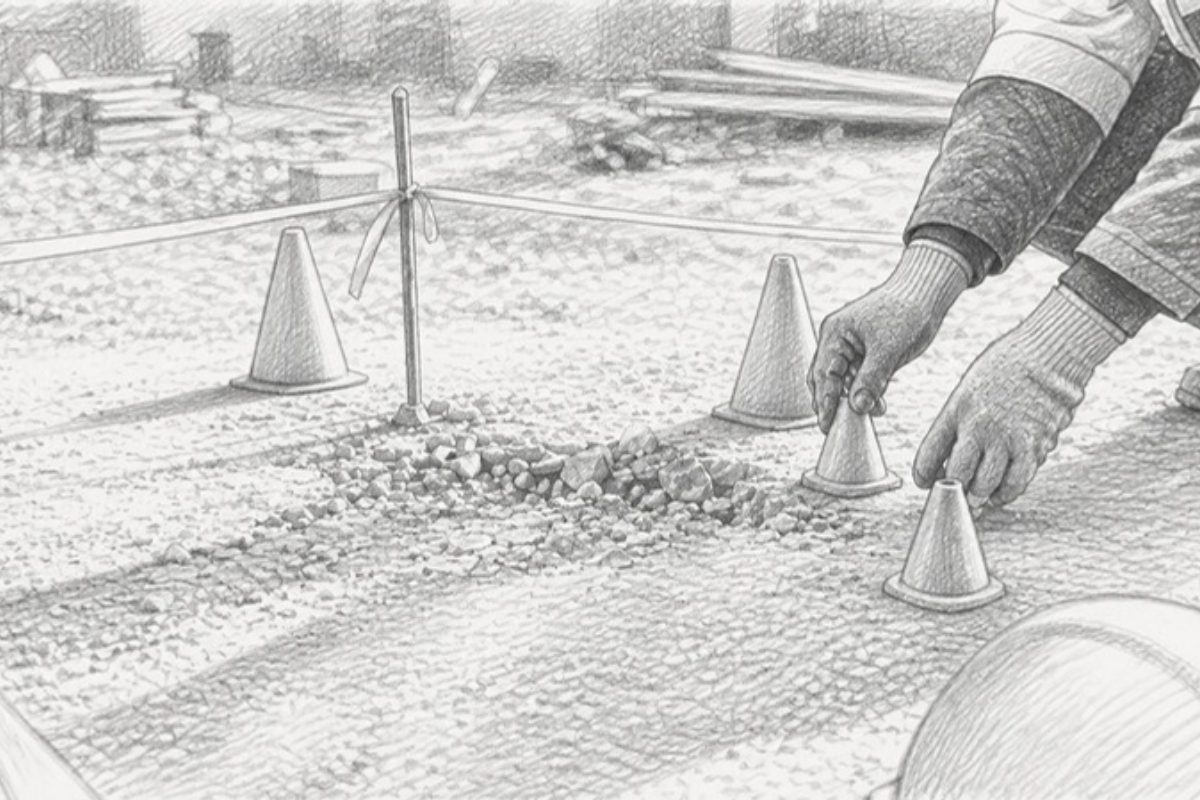
- Prepare the team and secure the scene. Confirm the site is safe, preserve physical evidence, and assemble a small multidisciplinary team, not just the person closest to the incident.
- Gather evidence. Collect daily reports, photos, CPM schedule updates, procurement records, equipment logs, and witness statements before memories fade or paperwork disappears.
- Build a timeline of events. Lay out what happened, in what order, with timestamps where you have them. This step alone often exposes the gap before you even apply a formal method.
- Apply the chosen analysis method. Run 5 Whys, build a Fishbone diagram, or complete a fault tree, depending on the complexity you identified.
- Identify the root cause or causes. Confirm the cause by asking whether removing it would have prevented the incident. If yes, you’ve likely found it. If it’s still plausible without that factor, keep digging.
- Design corrective actions. Assign a specific owner, a due date, and a measurable verification metric to every action item. Vague actions (“communicate better”) don’t survive the next audit.
- Implement and verify. Put the fix in place, then check back at a defined interval to confirm the problem hasn’t resurfaced.
Your evidence-collection checklist should cover:
- Site photos and video, timestamped where possible
- Daily reports and superintendent logs
- CPM schedule updates and revision history
- Procurement and delivery records
- Equipment inspection and maintenance logs
- Written witness statements, collected separately to avoid groupthink
A bridge equipment checklist for project managers offers a useful model for building your own equipment-focused evidence checklist if machinery or rigging is involved in the incident.
Your problem statement template needs four fields: what happened, where, when, and the measurable impact (cost, schedule days, or safety severity). Your action tracker needs five: the action, the owner, the due date, the verification metric, and the status.
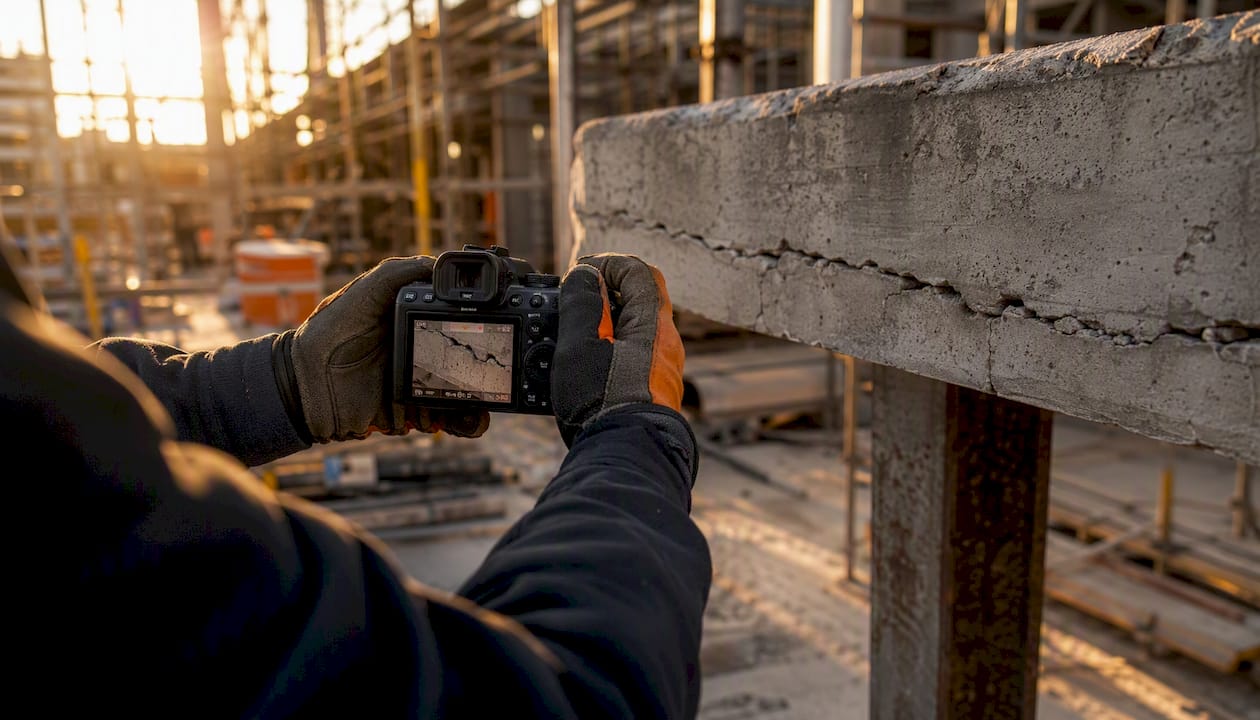
Pro Tip: Collect witness statements individually before the crew has a chance to compare notes. Group memory tends to converge on one version of events, and it’s not always the accurate one.
What Are the Common Root Cause Categories in Construction?
Construction RCA findings tend to fall into five categories, and using consistent category language makes your reports easier to compare across projects.
- People. Training gaps, unclear roles, fatigue, or miscommunication between trades. Example causes: a new hire never received site-specific safety orientation, or a foreman assumed another crew had completed a prerequisite task.
- Process. Missing or outdated procedures, unclear approval chains, or steps skipped under schedule pressure. Example causes: inadequate permit sequencing, a QA checklist that wasn’t updated after a scope change, or an RFI response that never reached the field crew.
- Materials and equipment. Defective materials, wrong specifications, or equipment failures. Example causes: a materials substitution made without engineering sign-off, or a crane inspection interval that lapsed during a busy stretch.
- Environment. Weather, site conditions, or physical hazards that weren’t adequately planned for. Example causes: unanticipated groundwater during excavation, or seasonal freeze-thaw cycles not built into the schedule logic.
- Design, contract, or external factors. Design errors, contractual ambiguity, or third-party dependencies outside the contractor’s control. Example causes: a missing schedule logic tie between two dependent activities, or a procurement lead-time misestimate baked into the original bid.
ASCE research on construction nonconformance supports organizing root causes this way, showing that structured categorization, spanning design, execution, and external factors, helps teams recognize patterns across projects rather than treating each incident as a one-off. Procurement-driven causes deserve special attention; a deeper look at the federal procurement lifecycle shows how lead-time assumptions get built into bids long before the schedule delay actually shows up on-site.
One clarifying note: a genuine act of nature (a hurricane shutting down a site for a week) isn’t a correctable root cause in the same sense as a process gap. It still deserves documentation, since it explains the delay, but your corrective action there is contingency planning, not a fix to a broken system.
What Do RCA Templates and Worked Examples Look Like?
A worked 5 Whys example makes the method concrete faster than any description can.
- Problem: A concrete pour failed inspection due to incorrect rebar spacing.
- Why 1: The rebar was placed at the wrong spacing. Because the crew followed an outdated shop drawing.
- Why 2: They had an outdated drawing. Because the drawing revision wasn’t distributed to the field.
- Why 3: The revision wasn’t distributed. Because there’s no formal sign-off step confirming field crews received updated drawings.
- Root cause: No document control checkpoint exists between design revisions and field distribution.
- Corrective action: Add a mandatory field acknowledgment step to the drawing revision process, tracked in the document control log.
For a Fishbone diagram on a fall-from-height incident, populate the standard categories like this:
- People: worker unfamiliar with fall protection anchor points, inadequate toolbox talk coverage
- Process: pre-task plan template missing a fall protection verification line item
- Equipment: harness inspection tag expired, anchor point rated below load requirement
- Environment: wind conditions exceeded safe working threshold for the platform type
Your RCA report should include these fields as a minimum standard:
| Report field | What it captures |
|---|---|
| Incident description | What happened, where, and when, in plain factual language |
| Direct cause | The immediate event or condition that triggered the incident |
| Root cause(s) | The underlying systemic factor(s) identified through analysis |
| Evidence log | Photos, documents, logs, and statements reviewed |
| Method used | 5 Whys, Fishbone, timeline analysis, or fault tree |
| Corrective actions | Specific fix, owner, due date, and verification metric |
| Verification date | When the fix will be checked for effectiveness |
What Are RCA’s Benefits and Limitations in Construction?
RCA delivers measurable upside when it’s done well, but it isn’t a silver bullet, and knowing where it falls short keeps you from over-relying on it.
The benefits are concrete:
- Fewer repeat safety incidents once the systemic driver is actually removed
- Reduced rework hours and change orders tied to recurring quality defects
- Tighter schedule control, since delay causes get fixed rather than absorbed into float
- A growing internal record of patterns that speeds up future investigations
The limitations are just as real:
- RCA is only as good as the evidence available; missing daily reports or incomplete schedule updates leave gaps no method can fill.
- Investigator bias can steer the analysis toward a convenient or familiar answer instead of the actual cause.
- Teams sometimes stop at the first plausible explanation and treat a contributing factor as the root cause.
- Complex incidents rarely have a single root cause, and assuming one exists can leave a second, unaddressed cause in place.
Three ways to sidestep these traps: build a multidisciplinary investigation team so no single perspective dominates, verify the fix against the next schedule or inspection cycle instead of assuming it worked, and pair 5 Whys with a Fishbone diagram whenever more than one category of cause seems plausible.
Pro Tip: If your 5 Whys chain ends at “the crew made a mistake,” you haven’t finished. Ask one more why, because that’s almost always a symptom of a process gap, not a genuine root cause.
How Do You Staff and Schedule an RCA on a Live Project?
RCA scope should match the size of the problem, and that means matching your team and timeline to the incident’s severity rather than running every investigation the same way.
Core roles to assign:
- Investigator lead — coordinates the process and keeps the team focused on systemic causes
- Safety representative — ensures the investigation itself doesn’t create new hazards and covers any regulatory reporting requirements
- Schedule or CPM lead — pulls and interprets schedule data for delay-related incidents
- Trade representative — brings field-level knowledge the office team won’t have
- QA/inspection staff — verifies technical findings against specifications and code
- Operations leadership — approves corrective action resourcing and removes roadblocks
Timeline bands scale with complexity:
- Quick (1 to 2 days): Minor defects or near misses with a clear, single cause. Handled by the site team using 5 Whys.
- Standard (1 to 2 weeks): Recurring quality issues or moderate delays involving multiple factors. Handled by a small cross-functional team using a Fishbone diagram or timeline analysis.
- Complex (multiple weeks, often with an external specialist): Serious safety incidents, major schedule disputes, or claims exposure. Bring in a specialist trained in fault tree analysis or forensic schedule delay analysis.
Hiring outside help makes sense once the incident involves potential litigation, a serious injury, or a delay claim large enough that an internal team’s findings need outside credibility. If procurement timing or contract-driven scheduling issues are part of the picture, a firm like Federal-rconstructionsolutions can help trace whether an estimating or bid-strategy gap contributed to the root cause before it becomes a repeat problem.
How Do You Verify RCA Fixes Actually Worked?
An RCA report only earns its value once someone checks whether the corrective action actually stopped the problem, and that check needs to be built into the process from day one, not treated as an afterthought.
Your report needs enough detail to stand up months later if a similar incident happens or a claim gets filed: the incident description, the evidence reviewed, the method applied, the root cause identified, and the corrective action with its owner and deadline. Skimping on any of these fields weakens your defensibility if the finding is ever challenged.
Verification runs on two kinds of indicators. Leading indicators show up before a recurrence would, things like completed training rosters, updated checklists, or a revised procedure now in use on the next schedule update. Lagging indicators confirm the fix over time: repeat incident rates over the following quarter, or a defect rate that drops on the next comparable scope of work. A workable verification process is simple: monitor the next relevant schedule update or inspection cycle, track whether the specific failure mode recurs, and close the loop formally once you’ve confirmed it hasn’t.

The last mile matters most and gets skipped most often: fold the lesson into your standard operating procedures, your onboarding training, project handover documents, and even your procurement specifications if the root cause traced back to a materials or vendor issue. An RCA finding that stays in a filing cabinet fixes nothing the next time a new crew rotates onto the project.
Why RCA Is the Cheapest Insurance Policy on Your Project
Most construction teams treat root cause analysis like a compliance chore, something you do after OSHA asks for paperwork. That’s backwards. The teams getting real value from RCA are the ones running it on near misses and minor defects, long before anyone with a clipboard shows up asking questions.
Here’s what gets underestimated: the hardest part of RCA isn’t the method, it’s the discipline to stop at the actual root cause instead of the first convenient answer. A crew that “didn’t follow procedure” is rarely the end of the story. Someone approved a schedule that made following procedure nearly impossible, or nobody updated the procedure after the last scope change. Chase ownership, not blame, and you’ll find the real fix almost every time.
If there’s one habit worth building into every project, it’s this: treat every RCA as a systems audit, not a personnel review. Ask who had the authority to prevent this, and whether they had the information and time to use it. That question, more than any diagram or checklist, is what separates a report that changes behavior from one that just gets filed.
Where to Learn More About Root Cause Analysis in Construction
- OSHA Incident Investigation — Federal guidance on structuring investigations to identify root causes and prevent recurrence.
- ASQ Fishbone Diagram Resource — Reference material on building and applying cause-and-effect diagrams.
- Lean Construction Institute: 5 Whys — Construction-specific guidance on applying the 5 Whys technique.
- SmartPM: Root Cause Analysis in Construction Projects — Practical framing of RCA using CPM schedule data as primary evidence.
- ASCE: Reasoning Mechanism for Construction Nonconformance — Academic research on categorizing construction root causes across design, execution, and external factors.
- GAO Program Evaluation Guide — Governance and documentation practices applicable to large-scale project investigations.
Sources
- 5 Why: Root Cause Analysis in Lean Construction | LCI
- OSHA (incident investigation guidance) - OSHA3886.pdf
- ASQ - Fishbone diagram resource
- Root Cause Analysis in Construction Projects | SmartPM
- ASCE - Reasoning mechanism for construction nonconformance (2008)
FAQ
What Are the 5 Steps of Root Cause Analysis?
A common five-step version covers: define the problem, collect data, identify possible causal factors, identify the root cause, and implement and verify corrective actions. Construction teams often expand this to seven steps to include scene preparation and evidence collection as distinct stages.
What Are the 5 P’s of Root Cause Analysis?
Definitions of the “5 P’s” vary by industry and source, and construction-specific guidance doesn’t standardize this framework. Most construction RCA instead organizes causes into the categories covered in this guide: people, process, materials/equipment, environment, and design/contract factors.
What Are the 7 Steps of Root Cause Analysis?
A construction-focused version includes: prepare the team and secure the scene, gather evidence, build a timeline, apply an analysis method, identify the root cause, design corrective actions, and implement and verify the fix.
How Does OSHA Define a Root Cause?
OSHA’s incident investigation guidance frames root cause identification as a systems-based investigation focused on the underlying conditions and decisions that led to an incident, rather than assigning blame to an individual.
Can 5 Whys Handle a Complex Construction Incident on Its Own?
Not reliably. The Lean Construction Institute notes that 5 Whys works best for simple to moderate problems and is often paired with a Fishbone diagram or timeline analysis once multiple factors are in play.