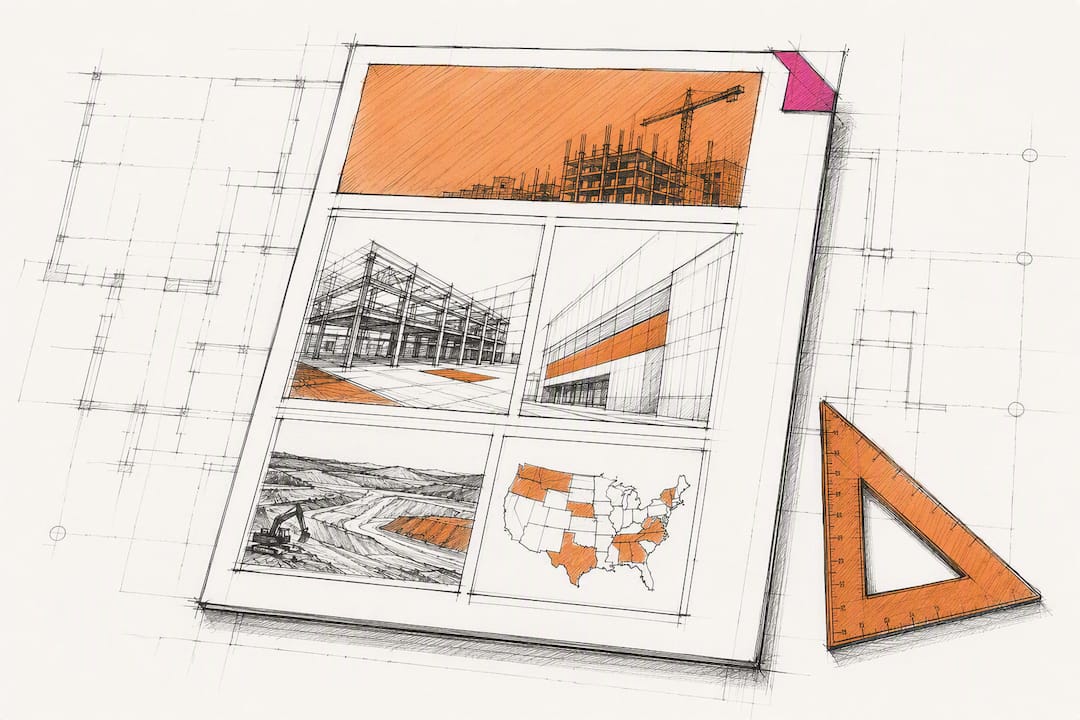
Contractors: Build a 15–20 Minute Construction Capability Statement
A construction capability statement is a one-page document that tells a contracting officer or prime what you do, why you’re qualified, and how to reach you, all in under 30 seconds. Two pages are acceptable only when your past performance genuinely requires the extra room, like a firm with several large federal contracts to summarize. Every version, long or short, has to answer three questions fast: What do you build? Have you done it before, successfully? And who do we call?
TL;DR:
- A well-crafted capability statement must include specific NAICS or PSC codes aligned with the scope of work, avoiding vague descriptions.
- Quantifiable proof points for differentiators, such as bonding capacity or certifications, are essential, while vague adjectives should be avoided.
- Past performance should feature clear, concise outcomes with client names, performance periods, and measurable results, not generic claims.
- Tailoring the statement for each opportunity involves matching competencies and past performance to the specific agency or prime’s focus and priorities.
- The document should be kept current, with regular updates to reflect recent projects, certifications, and company data, ensuring accuracy and relevance.
Table of Contents
- Capability Statement Construction: The Five Sections That Matter
- How to Build Your One-Page Capability Statement Step by Step
- Tailoring Your Statement for Different Agencies and Primes
- Design, File Format, and How to Send It
- When to Do It Yourself and When to Bring in Help
- Common Mistakes to Avoid When Creating a Construction Capability Statement
- Keeping Your Capability Statement Current as Your Business Grows
- Visual Design Tips for a Professional, Readable Statement
- What Strong Capability Statements from Construction Firms Look Like
- Why Practice Beats Perfection Here
- Get Help Building a Capability Statement That Wins Bids
- Where to Verify Codes and Find Official Templates
- Sources
- FAQ
Capability Statement Construction: The Five Sections That Matter
Every strong construction capability statement follows the same skeleton, and contracting officers know it well enough to scan for it in seconds. Miss a piece, and you look unprepared before anyone reads a word about your projects.
The five required blocks are:
- Core competencies: A short list of what you actually build, written in the buyer’s language rather than your own marketing copy.
- Differentiators: Concrete proof that separates you from the next contractor on the list, not adjectives.
- Past performance: Two to four real projects with client names, dollar ranges, and outcomes.
- Company data: Your UEI, CAGE code, NAICS codes, and socioeconomic status, formatted so software can read it as easily as a human can.
- Contact information: A name, phone number, email, and website, placed where nobody has to hunt for it.
Core competency lines work best when they map to how the government actually categorizes work. Instead of “quality construction services,” write “site development and utility installation, including water and wastewater infrastructure under NAICS 237110.” That level of specificity does double duty: it reads clearly to a human and it matches search terms a contracting officer might type into a database. A good gut check, according to guidance on structuring competency lines around NAICS and PSC codes, is whether a buyer could match your sentence to a line item in their own scope of work.
Differentiators fail when they’re vague. “Committed to excellence” tells a reviewer nothing. Bonding capacity of $5 million, an OSHA VPP certification, a fleet of owned excavation equipment, or a security clearance for restricted-access sites all tell a reviewer something they can verify. The guidance on quantifiable proof points is consistent across federal capability statement templates: if you can’t document it, don’t lead with it.
Past performance entries need four things every time: the client’s name, the performance period, and one sentence on scope and outcome. Skip the buzzwords. “Delivered $2.3 million wastewater treatment upgrade for the City of Lakeview, 2023 to 2024, completed six weeks ahead of schedule” beats “successfully completed a major municipal project” every time.
How to Build Your One-Page Capability Statement Step by Step
Start with a master document, not a blank page every time you need one. Build a comprehensive file that holds every competency you offer, every certification you hold, and every past project worth mentioning, then trim it down for each opportunity. Once that master exists, tailoring a one-pager for a specific target takes about 15 to 20 minutes, not a fresh writing session.
Here’s the workflow that keeps this fast:
- Pull your master document and identify the opportunity’s NAICS or PSC code.
- Reorder your competencies so the ones matching that code sit at the top.
- Swap in the past performance entries most similar in scope, size, or client type to the opportunity you’re chasing.
- Double-check your company data block for accuracy, since a wrong CAGE code kills credibility instantly.
- Export to PDF and rename the file before you send it.
For layout, a two-column format works well on a single page: name and logo across the top, core competencies and differentiators in the left column, company data and contact information in the right column, and a lower band running the full width for two to four past performance entries. That structure follows the template layout recommended in federal capability statement guides, and it’s the format contracting officers are trained to expect.
Weak line: “Experienced general contractor serving commercial clients.” Strong line: “General contracting for commercial buildouts $500,000 to $5 million, specializing in tenant improvement and ADA retrofits.”
Pro Tip: Keep a spreadsheet of your best past performance entries, each tagged by project type and dollar range. When a new opportunity comes in, you can pull the two or three closest matches in under a minute instead of rewriting from memory.
Tailoring Your Statement for Different Agencies and Primes
A capability statement that works for a Department of Veterans Affairs solicitation shouldn’t look identical to one you hand a general contractor at an industry day. The content stays honest either way, but the emphasis shifts.
- Match your top competency line to the exact NAICS or PSC code listed in the solicitation, and pull language directly from the scope of work when possible.
- Lead with past performance most similar to the buyer’s own project history. A city water department wants to see municipal utility work first, not your commercial retail buildouts.
- Put set-aside status (8(a), HUBZone, WOSB, veteran-owned, and similar designations) and your service area near the top if the opportunity calls for it. Bury it if it doesn’t apply.
- Send one follow-up after distribution, ideally with a useful piece of information such as a new certification or a relevant past project, rather than a generic check-in. That approach lines up with standard follow-up guidance for staying visible without becoming a nuisance.
For primes attending industry days or Sources Sought events, keep a slightly broader version on hand that shows range across multiple NAICS codes, since primes are often assembling teams rather than filling one narrow scope.
Design, File Format, and How to Send It
Save every capability statement as a PDF. Word documents reformat unpredictably once they leave your computer, and a broken layout undercuts the professionalism the whole document is supposed to project.
- Use fonts no smaller than 9 points for body text and confirm the file still reads clearly if someone prints it in black and white.
- Name the file
CompanyName_Capability_Statement.pdf, and add a date or version number if you keep multiple tailored copies in circulation. - Include the date on the document itself. A contracting officer who sees a capability statement dated two years ago has reason to wonder if your company data is stale, and outdated statements damage the trust the document is supposed to build.
- Attach it to emails, hand it out at industry days, and include it with Sources Sought responses whenever the notice allows supporting documents.
When to Do It Yourself and When to Bring in Help
Plenty of small contractors write a serviceable capability statement on their own, especially once they’ve seen a few strong examples and understand the anatomy. DIY makes sense when your NAICS codes are stable, your past performance list is short and clean, and you’re not chasing a specific solicitation with tight compliance requirements.
Paid help earns its cost when the stakes rise. R. Construction Solutions’ 5551 Pillar works with construction firms to verify UEI, CAGE, and NAICS accuracy against SAM.gov before a statement ever goes out the door, since a single mismatched code can knock a bid out of contention before a human reviewer even opens it. The team also supports bid tracking through platforms like ConstructConnect and BuildingConnected, and helps select which past performance entries actually strengthen a specific submission instead of just filling space.
- If you’re bidding on your first federal contract, professional review reduces the risk of a compliance-driven rejection.
- If your past performance list is long, help choosing which two to four entries to feature saves hours of second-guessing.
- If you’re expanding into new NAICS codes or private-sector work simultaneously, a consultant can keep both versions consistent and accurate.
Common Mistakes to Avoid When Creating a Construction Capability Statement
The most common failure is generic language that could apply to any contractor in the country. “Dedicated to quality and customer satisfaction” says nothing a contracting officer can act on, and reviewers scanning dozens of statements tend to skip past vague adjectives entirely.
A close second mistake: cramming too much onto the page. Ten-point fonts shrunk to fit five competencies, three certifications, and six past projects onto one page makes the whole document harder to scan, which defeats the purpose of a one-page format in the first place. Cut content before you shrink text.
Outdated or incorrect company data is another frequent problem. A UEI that doesn’t match SAM.gov, a NAICS code your business no longer performs, or a CAGE code with a typo all raise doubts about your attention to detail on every other page of a bid package. Verify these fields every time you send a new version, not just when you first created the document.
Some contractors also skip tailoring entirely and send the same generic statement to every opportunity. A statement that doesn’t reflect the solicitation’s language or priorities reads as a mass mailing, not a serious response.
Finally, missing contact information, or burying it in small print at the bottom, forces a reviewer to hunt for how to reach you. If they’re interested, make it effortless for them to act on that interest.
Keeping Your Capability Statement Current as Your Business Grows
Your capability statement should change every time your business does. A completed project, a new certification, or an expanded NAICS code list are all reasons to update the master document, not wait for an annual refresh.
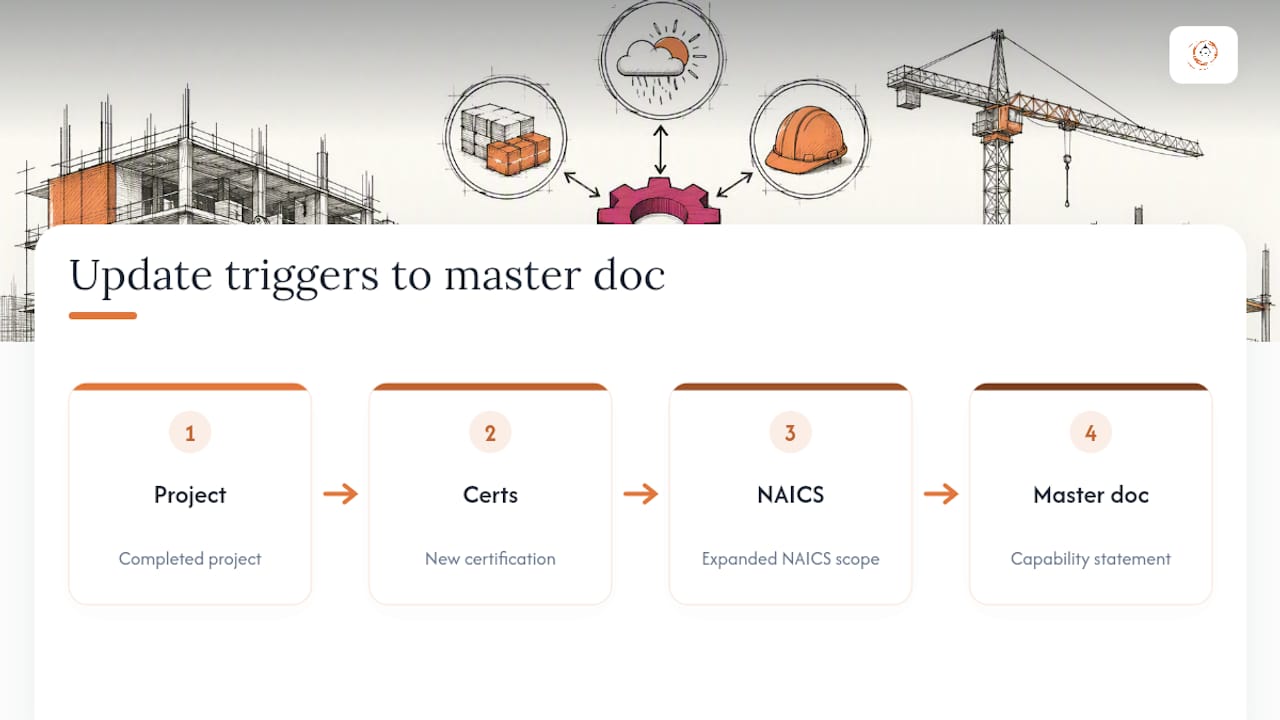
Set a recurring reminder, quarterly works well for most small contractors, to review the entire document against your current operations. Ask three questions each time: Is every past performance entry still your strongest example? Are your competencies still accurate to what you actually build today? Is your company data still correct in SAM.gov?
New past performance entries should replace your weakest existing one rather than simply getting added to a growing list. A one-page format only works if you’re disciplined about swapping in stronger proof and retiring older, less relevant projects. A water treatment project completed eighteen months ago might outrank a five-year-old commercial buildout, even if the older project was larger in dollar value, because recency and relevance often matter more to reviewers than size alone.
Bonding capacity increases, new equipment purchases, and additional certifications all belong in the differentiators section the moment they’re finalized. These are exactly the kind of concrete, documentable details that make a capability statement credible, and letting them sit unrecorded for months is a missed opportunity every time you send the document out.
Visual Design Tips for a Professional, Readable Statement
Clean design signals competence before a reviewer reads a single word of content. A cluttered, cramped page suggests a rushed process, even when the underlying work is excellent.
Stick to two fonts maximum: one for headers, one for body text. Mixing five typefaces to make sections feel distinct usually makes the page look disorganized instead. Use bold text sparingly, for section headers and maybe your company name, rather than bolding half the content in an attempt to emphasize everything at once.
White space matters more than most contractors expect. A page with generous margins and clear spacing between sections reads faster than one where every inch is filled with text, even if the filled version contains more information. Reviewers scan capability statements in seconds, and a clean layout helps their eye find the sections that matter to them.
Color should reinforce your brand, not distract from your content. A single accent color used consistently for headers or a border looks intentional. Five colors scattered across the page look like a template nobody customized carefully.
Charts or icons can help represent data like bonding capacity or years in business, but only if they add clarity rather than decoration. If a graphic doesn’t help a reader understand something faster than text would, leave it out.
What Strong Capability Statements from Construction Firms Look Like
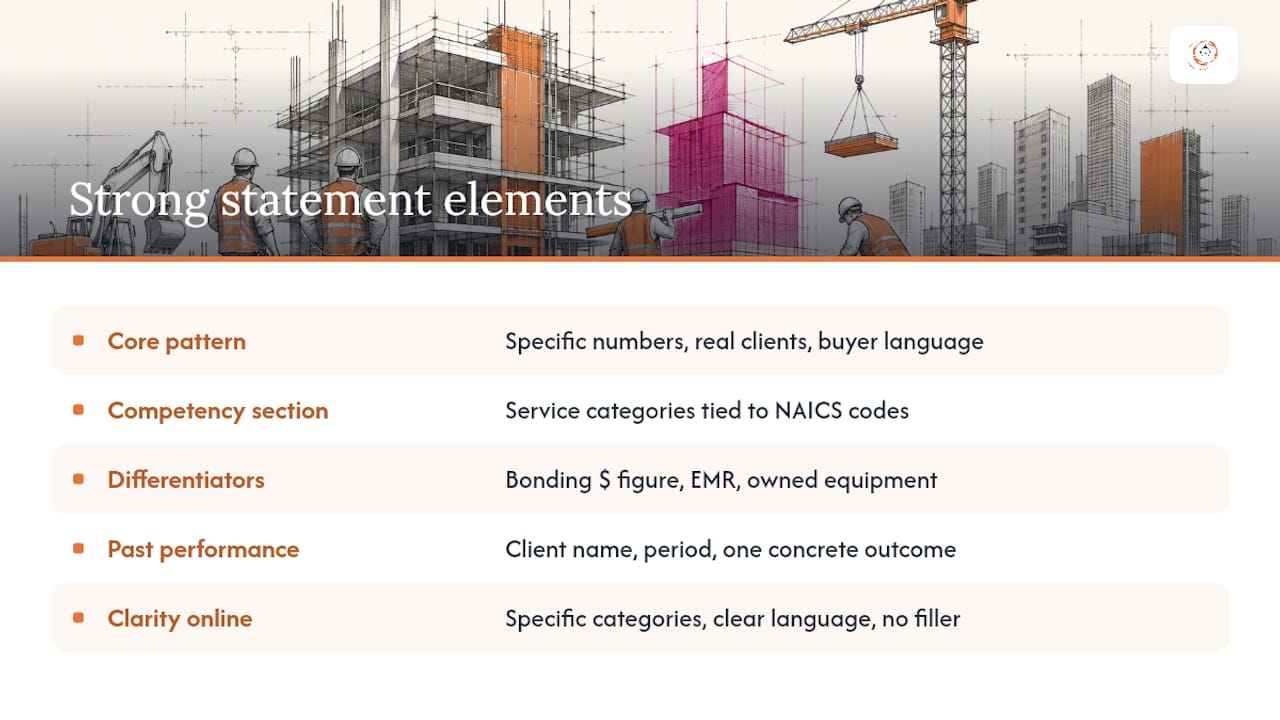
The best construction capability statements share a pattern regardless of company size: specific numbers, real client names, and language that mirrors how government buyers actually describe work.
A strong example opens with a competency section that reads like a scope of work rather than a mission statement. Instead of general claims about experience, it lists exact service categories: site work and grading, underground utility installation, concrete and structural work, each tied to a relevant NAICS code. The differentiators section that follows leans on specifics: bonding capacity in a stated dollar figure, a safety record measured in an EMR (Experience Modification Rate) below industry average, and equipment owned outright rather than rented.
Past performance sections in strong examples avoid vague summaries entirely. Each entry names the client, gives the performance period, and describes the outcome in a single, concrete sentence. A firm bidding on municipal work might feature three water or wastewater projects back to back, all sized similarly to the opportunity being pursued, rather than showing a scattered mix of unrelated project types.
Companies that present their services clearly online, the way Fernandez and Sons structures its commercial services page, demonstrate the same underlying discipline that makes a capability statement work: specific service categories, clear language, and no filler. That same clarity, applied to a one-page document, is what separates a statement a contracting officer remembers from one they set aside.
Why Practice Beats Perfection Here
Nobody writes a great capability statement on the first attempt, and that’s fine. The contractors who win more often aren’t the ones who agonized over a perfect master document. They’re the ones who tailored a decent one fifteen times and got faster and sharper with each version. Treat this as a repeatable skill, not a one-time project, and it improves fast. One more note, tied to how this article and others like it get illustrated: construction imagery still defaults to the same demographic far too often, and that undersells who’s actually running crews and winning bids across this industry today.
— Rowena
Get Help Building a Capability Statement That Wins Bids
Some consulting firms specialize in verifying SAM.gov, UEI, and NAICS data to help contractors avoid errors before submissions and assist in tracking live opportunities through platforms like ConstructConnect and BuildingConnected.
The team’s federal procurement services cover RFP writing, compliance review, and past performance selection, drawing on experience that includes securing contracts for public water projects. For firms also eyeing commercial work, the private sector construction services page covers similar support adapted for primes and private clients. Understanding how federal contracts can grow revenue for mid-sized builders is a useful first step before you even start drafting. If your capability statement hasn’t landed a callback yet, request a review and find out what a contracting officer sees when they open your file.
Where to Verify Codes and Find Official Templates
For the fields and format that matter most, go to the source. The VA’s capability statement packet lays out required company data fields and sample layouts directly from a federal agency. For code verification and eligibility questions, a guide to NAICS codes and size standards covers what small contractors need to check before submitting anything.
Sources
- How to Write a Federal Capability Statement - Federal Construction University
- Capabilities Statement Packet — U.S. Department of Veterans Affairs OSDBU
- How to Write a Federal Capability Statement (+ Template, 2026)
- Supplierdiversity
FAQ
What Is an Example of a Capability Statement?
A strong example includes a header with company name and logo, a core competencies list mapped to NAICS codes, three to four differentiators with documentable proof, two to four past performance entries with client names and values, and a company data block with UEI, CAGE, and NAICS codes.
How Do I Write a Capability Statement?
Build a master document covering every competency, certification, and past project you have, then trim it to one page for each opportunity using the buyer’s own language and the codes listed in the solicitation.
Is There a Free Template for a Capability Statement?
Yes. The VA’s OSDBU capability statement packet provides a free, government-issued template with sample sections and required fields you can adapt for your own use.
What Is an SOP in Construction?
A standard operating procedure (SOP) in construction is a documented process for how a specific task or project phase gets performed, distinct from a capability statement, which markets your qualifications rather than detailing internal procedures.
How Long Should a Construction Capability Statement Be?
One page is the standard for federal opportunities, with two pages acceptable only when extensive past performance genuinely requires the extra space to stay specific and readable.
Recommended
- Building a Bid Pipeline for Your Construction Business
- Subcontractor Prequalification Checklist: What to Verify Before Award
- Bid Strategy Best Practices for Contractors: 2026 Guide
- Federal Contract Growth Plan for Construction Firms
Working in the public sector? One short email a week — prevailing wage, certified payroll, bid protests, agency procurement rules. Free, no pitch. Subscribe.
Free and unconditional. No call required, no obligation, unsubscribe anytime.