
Why Subcontractor Relationships Win More Bids in 2026
Strong subcontractor relationships are the single most reliable driver of bid success in federal construction. Subcontractors represent 90% of total project costs, which means general contractors treat their subcontractor networks as a direct reflection of project risk. Firms that build trusted, consistent partnerships with GCs land more bid invitations, earn preferred vendor status, and close contracts at better margins. This guide explains why subcontractor relationships win more bids, how GCs actually evaluate those relationships, and what your firm can do right now to convert partnerships into a competitive edge on federal projects.
Why subcontractor relationships win more bids
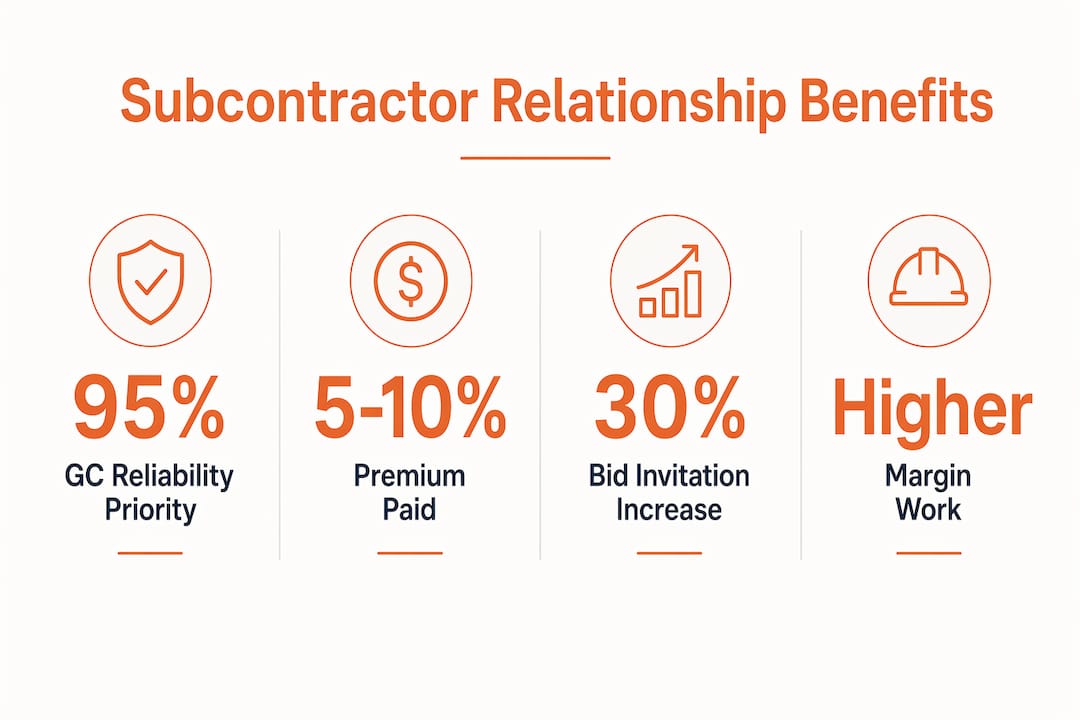
The core reason is trust. GCs prioritize reliability over lowest price nearly 95% of the time and will pay a 5–10% premium for a proven subcontractor. That premium reflects the cost of risk reduction. A trusted sub reduces the chance of schedule slippage, scope disputes, and costly field rework.
Bid invitations are not distributed randomly. GCs maintain preferred vendor lists, and those lists are built on relationship history, not cold outreach. Consistent follow-up with GCs can increase bid invitation rates by 20–30% within 3–6 months. That improvement comes entirely from relationship activity, not from submitting more cold bids.

The importance of subcontractor relationships also shows up in how GCs manage project risk. When a GC knows your firm delivers on time and communicates proactively, your bid carries less perceived risk than a lower-priced bid from an unknown sub. That perception directly influences award decisions on federal projects, where past performance and compliance history carry significant weight under FAR evaluation criteria.
How do subcontractor relationships influence GC bid decisions?
GCs apply a multi-factor evaluation process that goes well beyond price. The key criteria include:
- On-time performance history. A sub that consistently meets milestones reduces schedule risk for the entire project.
- Scope completeness. Bid leveling is the process GCs use to adjust bids that contain scope gaps. An overly low bid with missing line items often costs more after change orders than a complete bid at a higher price.
- Proposal professionalism. Clear, well-organized proposals signal that your firm manages projects with the same discipline.
- Responsiveness and collaboration. Soft factors like responsiveness differentiate bids that are close in price and scope.
- Supplier collaboration willingness. GCs favor subs who engage constructively during preconstruction, not just at bid time.
The bid leveling point deserves specific attention. Experienced GCs adjust low bids upward to account for missing scope before comparing them to complete proposals. A gap-filled bid at $180,000 may be evaluated at $210,000 after leveling, making a complete $195,000 bid the actual low number. Firms that understand this dynamic write scope-complete proposals every time, regardless of competitive pressure to cut line items.
Pro Tip: Review every proposal against the GC’s scope of work line by line before submission. Address any exclusions explicitly in writing. GCs reward transparency over surprises.
Understanding why contractors underbid is the first step toward writing proposals that GCs actually trust.
What are the measurable benefits of systematic subcontractor relationship management?
The benefits of contractor partnerships are quantifiable, not just anecdotal. Firms that adopt a systematic relationship management approach see bid opportunities increase by 40–60% within the first year. That figure reflects the compounding effect of consistent engagement across multiple GC relationships over time.
| Engagement approach | Typical outcome within 12 months |
|---|---|
| Cold bidding only | Minimal preferred list inclusion |
| Periodic follow-up (quarterly) | 20–30% more bid invitations |
| Systematic engagement from planning phase | 40–60% increase in bid opportunities |
| Owner-level relationship development | Access to pre-bid and sole-source opportunities |
The table above shows a clear progression. Each step up in relationship depth produces a measurable jump in opportunity volume. The most significant leap happens when you engage during the planning phase rather than waiting for an invitation to bid. Early involvement in preconstruction helps identify sequencing conflicts and risk mitigation strategies, which positions your firm as a project partner rather than a price provider.
Higher-quality relationships also unlock higher-margin work. Emergency calls, change order negotiations, and sole-source awards go to trusted subs first. These opportunities carry better margins than competitively bid work because price pressure is lower when the GC needs a reliable partner fast.
Pro Tip: Track every GC contact in a simple CRM or spreadsheet. Log the date, project discussed, and next follow-up action. Firms that document relationship activity close more bids than those that rely on memory.
Why does transactional bidding limit your win rate?
Transactional bidding treats every bid as an isolated event. You receive an invitation to bid, submit a number, and wait. This approach positions your firm as a commodity. Transactional bidding gives GCs no reason to favor you over the next sub on the list, because the relationship contains no accumulated trust or history.
The pitfalls of transactional bidding include:
- No access to pre-bid information that shapes a competitive proposal
- No emotional equity with the GC’s estimating team
- No early warning when a project scope changes
- No referrals to other GCs in the same network
Partnership leverage works differently. When your firm has a source-level relationship with a GC, you know what projects they are pursuing six months before bids are issued. You can provide owner-side leads that help the GC secure work, which creates reciprocal value that no price can replicate.
“True leverage comes from knowing what the GC is pursuing six months before project bids, and providing owner-side leads that help GCs secure work. Responding to invitations to bid is not a relationship. It is a transaction.”
Trades that bring owner-level relationships to GCs gain a unique competitive advantage by expanding access and long-term project opportunities. This is the difference between being on a bid list and being on a short list. The short list is where federal contract awards actually happen.
For firms pursuing federal work, the bid-no-bid decision becomes sharper when you have relationship intelligence. You stop chasing every RFP and start focusing on opportunities where your firm has a genuine competitive position.
How can construction firms build strong subcontractor ties to win more bids?
Building strong subcontractor ties requires a deliberate process, not occasional outreach. The following steps reflect best practices for firms competing on federal and commercial projects in 2026.
-
Engage during preconstruction, not just at bid time. Early subcontractor participation in pull-planning and preconstruction meetings enhances field coordination, reduces rework, and builds indispensable project partner status. Request to attend preconstruction meetings even when you are not yet awarded the work. GCs notice that initiative.
-
Deliver scope-complete, easy-to-read proposals every time. A professional proposal signals that your firm manages projects with the same care. Include a clear scope narrative, list all exclusions explicitly, and format the document so the GC’s estimator can review it in under five minutes.
-
Follow up systematically after every bid submission. One follow-up call after submission is standard. Three touchpoints over 30 days, including a post-award debrief whether you win or lose, is what builds a relationship. Ask GCs what you could have done better. They will tell you, and they will remember that you asked.
-
Invest in referral networks and industry presence. Established long-term partnerships create emotional equity and better information flow that allow flexible, intelligent bid structuring. Attend AGC chapter meetings, participate in subcontractor forums, and ask satisfied GC contacts for introductions to their colleagues.
-
Bring value before you need something. Share relevant project leads, flag permit issues you noticed on a job site, or send a GC a heads-up about a Davis-Bacon wage determination update that affects their upcoming project. This kind of proactive communication builds the trust that gets your phone answered when a preferred sub falls through.
For firms entering the federal marketplace, small business construction resources provide a structured path to building the compliance history and past performance record that GCs require before adding a sub to their federal preferred vendor list.
Effective subcontractor management for commercial projects follows many of the same principles: clear communication, documented scope, and consistent follow-through on commitments.
Key Takeaways
Strong subcontractor relationships win more bids because they replace price competition with trust, preferred vendor status, and access to opportunities that never reach open bid lists.
| Point | Details |
|---|---|
| Trust outweighs price | GCs pay a 5–10% premium for proven subs to reduce project risk. |
| Systematic engagement compounds | Consistent relationship activity increases bid opportunities by 40–60% within one year. |
| Scope completeness matters | Complete proposals beat low bids with gaps after GCs apply bid leveling adjustments. |
| Early engagement builds partner status | Joining preconstruction meetings positions your firm as a strategic partner, not a vendor. |
| Transactional bidding limits access | Partnership-level relationships unlock pre-bid intelligence and sole-source opportunities. |
Why I believe relationships are now the primary bid asset
I have watched firms with average pricing consistently outperform lower-cost competitors on federal bid awards. The pattern is always the same. The winning firm had a relationship with the GC’s estimating team before the RFP was published. They knew the scope priorities, the schedule constraints, and the owner’s hot-button concerns. That knowledge shaped a proposal that read as if it was written specifically for the project. Because it was.
The conventional wisdom says you win bids by sharpening your pencil. That is wrong. You win bids by being the firm a GC calls when they need certainty. Price gets you considered. Relationship gets you selected.
The market shift I see accelerating in 2026 is GCs consolidating their preferred vendor lists. They are working with fewer subs on more projects. Strategic partnerships enable shared resources and allow pursuit of larger projects, with trust and collaboration becoming the market’s most valuable currencies. Firms that invest in three deep GC relationships will outperform firms that chase 30 cold bid invitations every quarter.
My recommendation is direct: stop measuring success by the number of bids submitted. Start measuring it by the number of GCs who call you before they publish an invitation to bid. That metric tells you exactly where your relationship capital stands.
— Rowena
Federal-rconstructionsolutions helps you convert relationships into contract wins
Federal-rconstructionsolutions works with construction firms that are serious about building the relationship infrastructure needed to win federal contracts consistently. The 5551 Pillar program addresses the full bid lifecycle, from vendor prequalification and preferred list development to RFP writing and compliance support that meets the 90% compliance threshold federal agencies require.
The ConstructConnect project leads and bid support service gives your firm early visibility into federal project opportunities, so you can engage GCs during the planning phase rather than scrambling at bid time. For firms ready to build a preferred vendor position across both federal and private sector work, the federal procurement services team provides the compliance framework and relationship strategy that turns consistent engagement into consistent contract awards.
FAQ
Why do subcontractor relationships matter more than low pricing?
GCs prioritize reliability over cost nearly 95% of the time and will pay a 5–10% premium for a trusted subcontractor. A lower price from an unknown sub carries more perceived risk than a slightly higher price from a proven partner.
How long does it take to see results from relationship building?
Consistent follow-up with GCs can increase bid invitation rates by 20–30% within 3–6 months. Firms that engage during the planning phase see bid opportunities grow by 40–60% within the first year.
What is bid leveling and how does it affect my proposals?
Bid leveling is the process GCs use to adjust proposals that contain scope gaps, adding estimated costs for missing work before comparing bids. A scope-complete proposal at a higher price often wins over a low bid that requires leveling adjustments.
How does early preconstruction engagement improve bid success?
Joining preconstruction meetings helps identify sequencing conflicts and risk mitigation strategies before bids are issued. This positions your firm as a project partner and builds the trust that leads to preferred vendor status.
What is the difference between a bid list and a short list?
A bid list is a broad pool of subs who receive invitations to bid. A short list is a small group of trusted partners a GC calls first for preferred, sole-source, or emergency work. Short-list status comes from relationship depth, not bid volume.