
Cure Notice in a Federal Contract: What Contractors Must Know
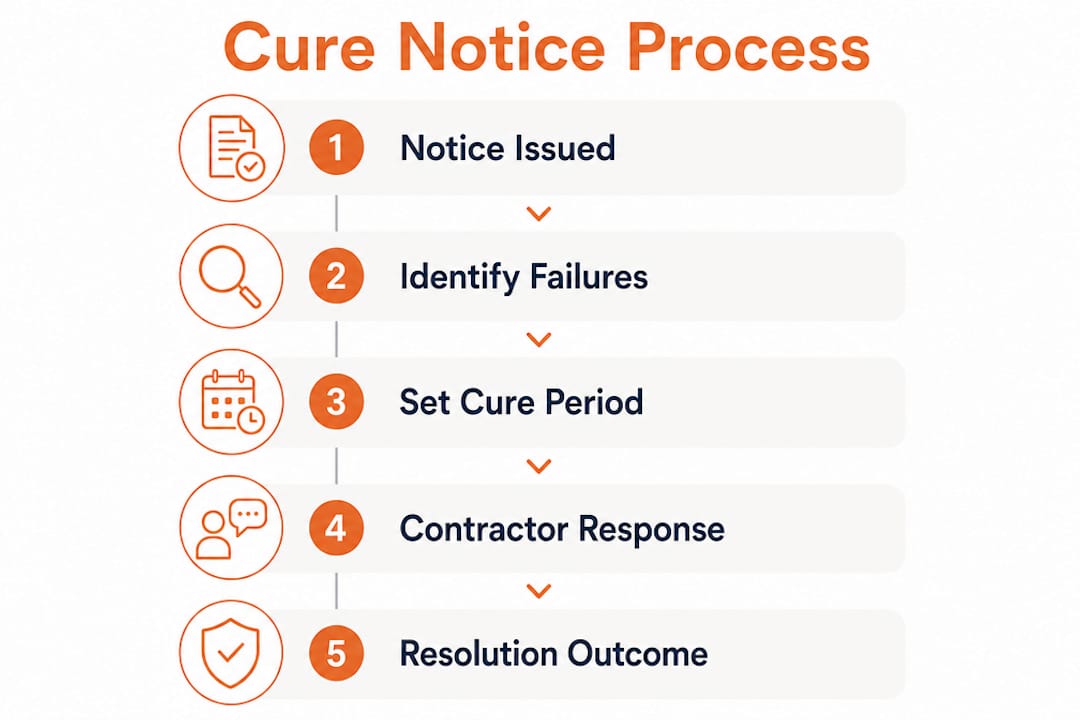
A cure notice in a federal contract is a formal written communication issued by a contracting officer that identifies specific performance failures and gives the contractor at least 10 days to correct them before the government can terminate the contract for default. Governed primarily by FAR 49.402-3, this notice is not a suggestion. It is a legal trigger with real consequences. Construction firms that understand the cure notice process federal regulations require are far better positioned to respond effectively, protect their past performance record, and keep their contracts alive.
What is a cure notice in a federal contract?
A cure notice is defined under the Federal Acquisition Regulation as the required written warning a contracting officer must issue before terminating a fixed-price contract for default, except in cases of late delivery. The standard clauses governing this process are FAR 52.249-8 for fixed-price supply contracts and FAR 52.249-10 for fixed-price construction contracts. Both clauses require the government to give the contractor a defined opportunity to fix the problem before escalating to termination.
The cure notice serves two functions at once. It protects the government’s interest by creating a documented record of the contractor’s deficiencies. It also protects the contractor by giving them a formal window to respond and recover.

A cure notice is distinct from a show cause notice. A show cause notice typically comes after the cure period has expired or when delivery is already late, and it asks the contractor to explain why the contract should not be terminated. The cure notice comes first and focuses on giving the contractor a chance to fix the problem, not just explain it.
What triggers a cure notice and what does it contain?
Contracting officers issue cure notices when a contractor’s performance endangers the successful completion of the contract. Common triggers include:
- Deficient workmanship or quality failures that fall below contract specifications
- Failure to maintain required staffing levels or subcontractor coordination
- Safety violations that put the project or personnel at risk
- Inadequate progress that threatens the contract completion date
- Failure to submit required reports, certifications, or compliance documentation
Cure notices do not apply to simple late delivery situations. Those scenarios follow a different procedural path under the FAR. The cure notice applies when the underlying performance itself is at risk, not just the schedule.
A properly issued cure notice must contain specific elements. It must identify the exact failures, reference the relevant contract clauses, state the cure period (a minimum of 10 days unless urgent circumstances justify less), and outline the consequences of failing to cure. Courts interpret these requirements strictly. A notice that omits the breach description or fails to define the cure period may be legally defective, which can invalidate a subsequent termination action.
Pro Tip: Keep every cure notice and all related correspondence in a dedicated contract file from day one. Federal contract compliance issues often hinge on documentation, and a complete paper trail gives you leverage in any dispute.
Contractors should also review their federal procurement compliance checklist regularly to catch performance gaps before a contracting officer does.
How should contractors respond to a cure notice?
The first 72 hours after receiving a cure notice are the most critical. Treat the notice as both an operational and a legal emergency from the moment it arrives. Here is the response sequence that protects your position:
- Calendar the deadline immediately. Account for time zones and the submission method specified in the notice. Missing the cure period deadline by even one day can forfeit your rights entirely.
- Send a neutral written acknowledgment. Confirm receipt without admitting fault or making promises. Avoid panic responses and do not over-concede in this initial communication, as that erodes your negotiation leverage.
- Assemble your response team. Pull in your project manager, site superintendent, legal counsel, and key subcontractors within 24 hours. A cure notice is not a project management issue alone. It is a legal event.
- Conduct a root cause analysis. Identify exactly what caused the deficiency cited in the notice. Your cure plan must address the actual cause, not just the symptom.
- Draft a documented cure plan. A strong cure plan includes specific corrective actions, named personnel responsible for each action, resource commitments, and concrete milestones with dates.
- Submit the written response before the deadline. Use the submission method specified in the notice. Retain proof of delivery.
Vague assurances do not satisfy contracting officers. A response that says “we are working on it” without specifics is treated the same as no response at all. The goal in responding is not to win an argument. The goal is to present a practical, fact-based plan that addresses the breach clearly and convincingly.
Pro Tip: Coordinate with your surety bond company when you receive a cure notice. Your surety has a financial stake in the outcome and may provide resources, legal support, or subcontractor referrals that strengthen your cure plan.
What are the legal implications of a cure notice?
A cure notice is a legal prerequisite. The government cannot terminate a fixed-price construction contract for default, for reasons other than late delivery, without first issuing one. Skipping this step exposes the government to a wrongful termination claim. That said, contractors who ignore or mishandle the notice give up significant legal protections.
Failure to respond or cure within the prescribed period is generally treated as a concession that the contractor cannot perform. This presumption is difficult to overcome in litigation. A termination for default that follows a properly issued, unanswered cure notice is nearly impossible to challenge on procedural grounds.
One legal nuance that catches contractors off guard is the waiver defense. Some contractors assume that because the government tolerated previous performance problems without issuing a cure notice, it cannot suddenly terminate the contract. Courts have addressed this directly.
A common legal pitfall is the waiver defense, where government tolerance of previous breaches does not eliminate the need for fresh cure notices prior to termination. Each new breach requires its own procedural process, and prior tolerance does not create a blanket waiver of the government’s termination rights.
The consequences of a default termination extend beyond the immediate contract. Termination for default affects your past performance evaluations, which federal agencies review when awarding future contracts. It can also trigger liability for excess reprocurement costs, meaning the government can charge you the difference between your contract price and the higher cost of hiring a replacement contractor.
Contractors should also review the federal procurement lifecycle to understand where cure notices fit within the broader sequence of contracting actions and default procedures.
Practical scenarios: navigating cure notices in construction contracts
Consider a concrete scenario. A general contractor on a federal building renovation project falls behind on structural inspections and fails to submit required quality control reports for three consecutive weeks. The contracting officer issues a cure notice citing FAR 52.249-10, identifying the missing reports and the inspection backlog as the specific failures, and granting 10 days to cure.
The contractor’s response timeline should look like this:
| Day | Action |
|---|---|
| Day 1 | Acknowledge receipt in writing; calendar the deadline; assemble response team |
| Day 2 | Complete root cause analysis; identify responsible personnel and resource gaps |
| Day 3–4 | Draft cure plan with specific milestones, staffing assignments, and report submission schedule |
| Day 5–6 | Review cure plan with legal counsel; gather supporting documentation |
| Day 7 | Submit formal written cure plan to contracting officer with proof of delivery |
| Day 8–10 | Begin executing cure plan; document all corrective actions with dated records |
A strong cure plan for this scenario would name the specific quality control manager assigned to close the inspection backlog, commit to a weekly report submission schedule with dates, and include a phased remediation schedule showing when each overdue inspection would be completed.
What to avoid in this situation:
- Ignoring the notice or assuming the contracting officer will extend the deadline informally
- Submitting a response without specific names, dates, or resource commitments
- Failing to coordinate with subcontractors who contributed to the deficiency
- Relying on verbal conversations instead of written communication
Contractors who respond well to cure notices often avoid termination entirely. A credible, documented cure plan signals to the contracting officer that the contractor is capable and committed. Contractors who respond poorly, or not at all, accelerate the path to default. Reviewing common federal bidding mistakes can also help firms identify compliance gaps before they reach the cure notice stage.
For additional context on contractor compliance obligations, the contractor compliance guide from GCS Contractors offers useful perspective on how compliance failures escalate in construction environments.
Key Takeaways
A cure notice is a legal prerequisite to federal contract termination for default, and a documented, specific cure plan submitted within the 10-day window is the contractor’s most effective defense.
| Point | Details |
|---|---|
| Regulatory foundation | FAR 52.249-10 governs cure notices in fixed-price construction contracts and mandates a minimum 10-day cure period. |
| First 72 hours matter most | Calendar the deadline, send a neutral acknowledgment, and begin drafting a documented cure plan immediately. |
| Specificity wins | Cure plans must name responsible personnel, commit resources, and set concrete milestones. Vague assurances fail. |
| Legal consequences are severe | An unanswered cure notice supports termination for default, which damages past performance ratings and triggers reprocurement liability. |
| Waiver defense is limited | Prior government tolerance of breaches does not eliminate the need for a fresh cure notice before each new termination action. |
What I’ve learned about cure notices after years in federal procurement
Contractors consistently underestimate the legal weight of a cure notice until they are sitting across from a contracting officer who has already decided to terminate. I have seen firms with strong field teams lose contracts not because they could not fix the problem, but because they treated the notice as a paperwork formality rather than a legal event requiring immediate, coordinated action.
The most damaging mistake I see is the emotional response. A contractor receives a cure notice, disagrees with the contracting officer’s characterization of the deficiency, and spends the first three days drafting a rebuttal instead of a cure plan. That instinct is understandable. It is also wrong. The cure period is not the time to argue about who is right. It is the time to demonstrate that you can perform.
The contractors who navigate cure notices successfully share one habit: they build compliance checkpoints into their daily project workflows before any notice arrives. When quality control reports, inspection logs, and subcontractor coordination records are already current and organized, responding to a cure notice takes days instead of weeks. The cure period becomes an opportunity to show the contracting officer exactly how capable your team is.
FAR requirements continue to evolve, and the 2026 procurement environment places increasing emphasis on contractor accountability and past performance. Firms that treat federal contract compliance as an ongoing discipline, not a reactive scramble, are the ones that build durable federal contracting businesses.
— Rowena
Federal-rconstructionsolutions can help you manage cure notices
Receiving a cure notice does not have to mean losing a contract. Federal-rconstructionsolutions works directly with construction firms to build the compliance systems and response strategies that protect your federal contracts when it matters most.

Federal-rconstructionsolutions’ 5551 Pillar program provides construction firms with tailored support across the full federal procurement process, from RFP preparation to cure notice response planning. The team helps contractors develop documented cure plans, maintain compliance records, and coordinate with contracting officers effectively. If you are managing a federal contract and need expert guidance on compliance or cure notice procedures, explore the federal procurement services Federal-rconstructionsolutions offers to construction firms at every stage of the contracting process.
FAQ
What is a cure notice in a federal contract?
A cure notice is a formal written notice from a contracting officer that identifies specific performance failures and gives the contractor at least 10 days to correct them before the government can terminate the contract for default under FAR 49.402-3.
How long does a contractor have to respond to a cure notice?
The FAR mandates a minimum cure period of 10 days, though the contracting officer may grant more time depending on the complexity of the deficiency. Contractors should submit a written cure plan before the deadline expires.
What happens if a contractor ignores a cure notice?
Failure to respond or cure within the prescribed period is treated as a concession of inability to perform, which supports termination for default and can result in damaged past performance ratings and liability for excess reprocurement costs.
What is the difference between a cure notice and a show cause notice?
A cure notice gives the contractor time to fix a performance deficiency before termination. A show cause notice typically follows an expired cure period or a late delivery situation and asks the contractor to explain why the contract should not be terminated.
What should a cure plan include?
A strong cure plan identifies the root cause of the deficiency, names the personnel responsible for corrective actions, commits specific resources, and sets concrete milestones with completion dates. Vague assurances do not satisfy contracting officers and are treated as non-responsive.