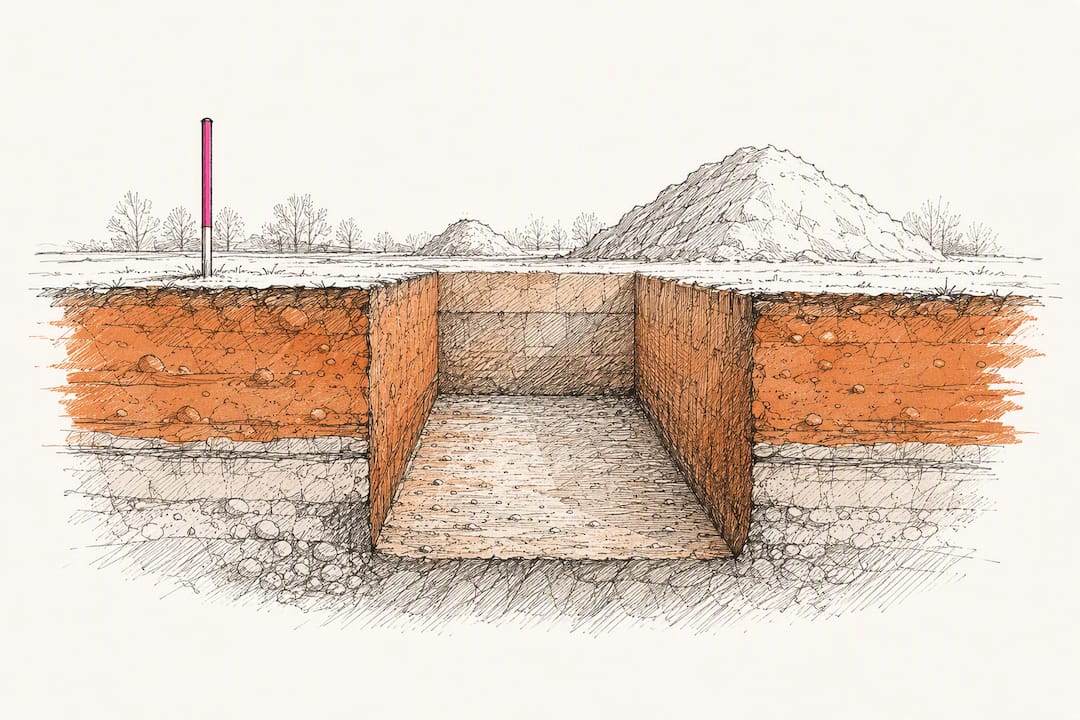
Contractors: Construction Process Improvement That Cuts Excavation 15%
Adopt a Lean-based continuous improvement approach, pairing Value Stream Mapping and the Last Planner System with a PDCA cycle, then layer in a focused digital dashboard to track results. This combination cuts rework and improves schedule reliability without requiring a companywide overhaul. The steps below, drawn from field-tested methods and Rowena’s review of documented project results, show exactly how to start small and scale what works.
TL;DR:
- Focusing on the highest-impact work package and mapping its full value stream maximizes the chances of successful process improvement.
- Running small pilots with Kaizen events or PDCA cycles on identified bottlenecks produces tangible results within weeks.
- Tracking a limited set of KPIs like work plan reliability and first-time quality offers meaningful insights without overwhelming data collection efforts.
- Digital tools should be layered onto manually mapped workflows before automation to prevent amplifying existing process flaws.
- Leadership commitment and clear measurement are critical for sustaining progress and avoiding common implementation stalls.
Table of Contents
- What Construction Process Improvement Methods Should You Try First?
- Core Lean and Continuous-Improvement Methodologies
- How Do You Implement a Construction Process Improvement Plan?
- What KPIs Should You Track for Construction Process Optimization?
- Where Does Digital Integration Fit in Lean Construction?
- What Blocks Construction Process Improvement, and How Do You Fix It?
- What Results Have Lean-Digital Construction Pilots Actually Delivered?
- A 90-Day Playbook for Getting Started
- Let Federal-rconstructionsolutions Help You Run the Pilot
- Sources
- FAQ
What Construction Process Improvement Methods Should You Try First?
Not every project needs every tool. Start with the method that matches your most pressing problem, then expand once you see results.
- Value Stream Mapping (VSM) — best for projects with unclear handoffs between design, procurement, and site work. Expect a clear picture of waste within one to two weeks. A project manager or operations lead should run this, since it requires visibility across trades and phases.
- Last Planner System (LPS) — best for schedule reliability problems, especially missed commitments between subcontractors. A superintendent or foreman typically leads the weekly planning huddles, and results in more predictable weekly work plans within a month.
- Kaizen events — best for a specific, bounded bottleneck (a slow inspection step, a recurring material delay). A two-to-three-day focused event, led by the foreman with support from a process champion, often produces an immediate, testable fix.
- 5S — best for site organization and safety issues that slow down crews. Low cost, fast to implement, and usually owned by the site superintendent.
- Six Sigma basics (root cause tools) — best for quality defects that repeat across multiple projects. Requires more data and a longer timeline, so it’s best led by an operations lead with some training in basic statistical tools.
Pick one. Running all five at once is how pilots collapse under their own weight before they prove anything.
Core Lean and Continuous-Improvement Methodologies
Each method solves a different problem, and they interlock more than most contractors realize.
- PDCA (Plan, Do, Check, Act) is the engine underneath every other Lean tool. You plan a change, test it small, check the result against a target, then act by standardizing or discarding it. Inputs: a hypothesis and a baseline metric. Output: a documented, repeatable countermeasure.
- Kaizen is PDCA compressed into a short, intense event focused on one process step. Inputs: a defined scope and a cross-functional team. Output: an immediate process change plus a list of follow-up actions.
- Value Stream Mapping documents every step in a process, current-state first, then flags what adds value, what doesn’t add value but is necessary, and what is pure waste. Inputs: direct observation and time data. Output: a future-state map that becomes the target condition.
- Last Planner System replaces top-down master schedules with pull planning built by the people actually doing the work. Inputs: a master schedule and weekly commitments from each trade. Output: a weekly work plan and a Percent Plan Complete (PPC) score.
A typical sequence looks like this: map the value stream for site excavation, run a Kaizen event on the worst bottleneck it reveals, then use LPS to hold the new sequence accountable week over week. Lean methods like these, when backed by leadership commitment, improve schedule, cost, quality, safety, and team morale together, not one at the expense of another.
How Do You Implement a Construction Process Improvement Plan?
Improvement programs fail more often from poor sequencing than from picking the wrong tool. Run the steps in this order.
- Align leadership and select scope. Choose a work package with high impact and a measurable boundary, such as one trade’s excavation sequence or one floor’s rough-in. Vague scopes (“improve productivity”) produce vague results.
- Map the current state. Walk the process and classify every step as value-added, necessary-but-non-value-added, or pure waste. Since upstream phases like design and procurement heavily influence site productivity, map the full value stream rather than isolating the task in front of you.
- Design countermeasures and pilot them. Run a short Kaizen event or a single PDCA loop against the biggest waste you found. Keep the pilot small enough to fail safely.
- Layer in short-cycle planning. Use LPS and daily huddles during the pilot window so commitments get tracked in real time, not discovered after the fact.
- Measure, standardize, and scale. Compare results against your baseline, lock in what worked as a standard operating procedure, then apply the same sequence to the next work package.
Pro Tip: Keep a running Plus/Delta log during weekly LPS meetings. Record what worked (Plus) and what didn’t (Delta), and assign someone to act on each Delta item before the next meeting. Improvements documented this way survive project turnover; improvements kept in someone’s head do not.
What KPIs Should You Track for Construction Process Optimization?
Track fewer metrics, well, rather than many, poorly. A field pilot combining VSM with BIM-driven dashboards produced a 15% reduction in excavation duration and a 2.06% gain in overall project schedule, and that gain came from watching a small set of indicators closely, not from tracking everything.
- Takt time per process step — how long each repeatable unit of work should take, and how far actual performance drifts from it.
- Weekly Work Plan Reliability (PPC) — the percentage of weekly commitments actually completed.
- First-Time Quality (FTQ) — the percentage of work passing inspection without rework.
- RFI response time — how long it takes to get a decision back from design or ownership.
- Equipment utilization — hours of productive use against hours of availability.
Collect these cheaply: time sampling during site walks, daily foreman logs, and BIM-synced status updates cover most of it without new hardware. A layered measurement framework that rolls task-level data up into project-level indicators helps you separate short-run noise, a bad weather week, a late delivery, from a genuine long-run trend worth acting on.
Where Does Digital Integration Fit in Lean Construction?
Digital tools amplify a good process and entrench a bad one. Map and fix the workflow manually first; only then apply sensors, automation, or dashboards to it. Automating a broken handoff just makes the mistake happen faster.
A practical starter stack looks like this:
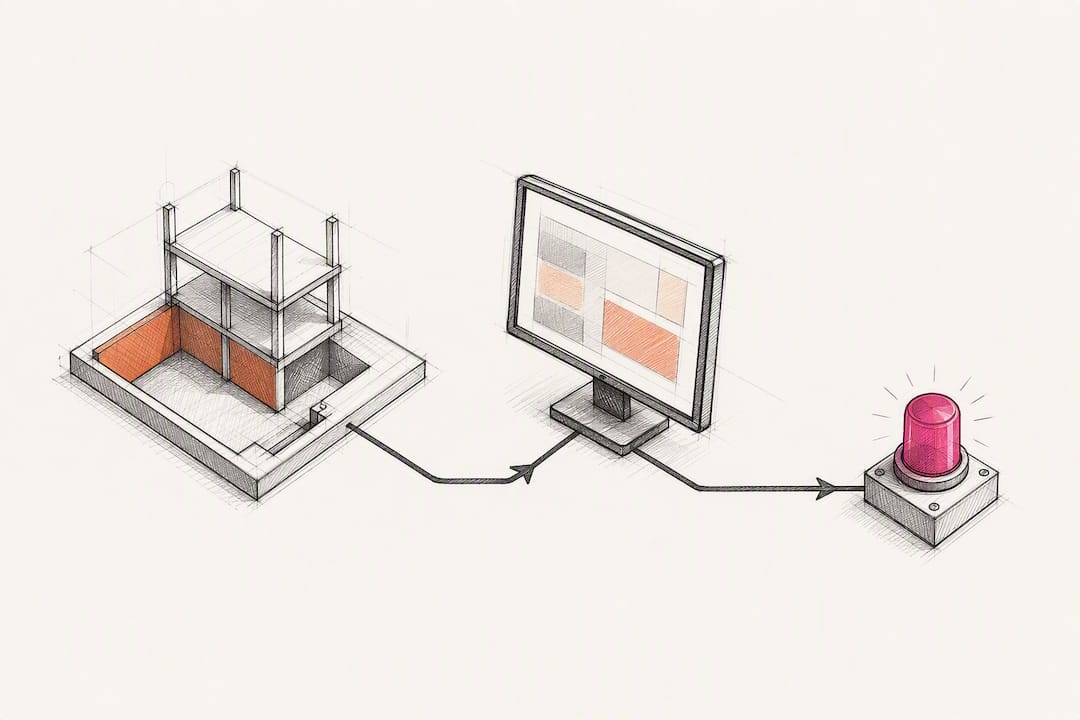
- Sync a 4D or 5D BIM model to a single high-visibility activity, such as excavation or structural steel.
- Feed that data into a dashboard tool like Power BI so trends are visible without a manual report.
- Set simple automated alerts for threshold breaches (PPC dropping below a set target, for example) rather than trying to automate the whole workflow at once.
Pilot advice: validate one synchronized workflow with three KPIs on a two-week review cadence before adding a second activity. This also shortens the time between a decision request and a resolution, since dashboards and automated workflows measurably reduce RFI response time when the underlying process is already sound. Teams researching adjacent automation, like dispatch and field coordination, can find useful parallels in how AI-driven dispatch systems shorten similar feedback loops in the trades.
Pro Tip: Feed one activity’s data through the full pipeline, BIM to dashboard to alert, before scaling to a second. Validating the pipeline on a single, well-understood activity catches integration problems while the stakes are still low.
What Blocks Construction Process Improvement, and How Do You Fix It?
The biggest obstacle isn’t the method, it’s follow-through. The most common failure point is a lack of genuine leadership commitment, paired with a surface-level understanding of what Lean actually requires.
- Contractual silos between GC and subcontractors slow adoption; fix this by writing collaborative planning expectations into the subcontractor scope early.
- Measurement gaps leave teams arguing about impressions instead of data; fix this by picking your KPIs before the pilot starts, not after.
- Training gaps cause tools to be used mechanically without understanding; fix this with short, role-specific training tied to the actual pilot, not a generic Lean seminar.
- No visible champion lets initiatives quietly die; assign one person to own the pilot’s success and report on it weekly.
If a pilot stalls, look first at whether leadership actually protected the team’s time for it. Most stalls trace back to that, not to the method itself.
What Results Have Lean-Digital Construction Pilots Actually Delivered?
The numbers back the approach up. A documented field implementation combining Lean techniques with digital tools delivered a 15% reduction in excavation time and a 2.06% improvement in overall project scheduling, gains that came from watching a handful of KPIs, not from a plant-wide software rollout.
- The National Institute of Standards and Technology names five priority areas for breakthrough productivity gains: BIM deployment, improved job-site efficiency, prefabrication, demonstration installations, and performance measurement.
- Some construction consultants apply a measurement-first philosophy to process optimization work, helping teams identify where their current process actually loses time before recommending any tool or software.
[internal_data] [brand_signal] [case-study placeholder: client project outcomes] [author_bio]
A 90-Day Playbook for Getting Started
Here’s how Rowena would sequence the first three months: get leadership alignment in week one, map one work package with VSM by week three, run a Kaizen pilot on the worst bottleneck it reveals by week six, layer in weekly LPS huddles through week ten, then stand up a simple KPI dashboard by day 90. Involve a foreman, a PM, and one operations lead, and budget for a few hours a week, not a dedicated team. On the visual side, this industry’s marketing badly needs photography that reflects who actually builds things: women, Black and Latino tradespeople, and Asian and Indigenous crew leads belong in these images just as often as anyone else.
— Rowena
Let Federal-rconstructionsolutions Help You Run the Pilot
Running a Lean pilot alongside a full workload is hard to do alone, and that’s exactly where Federal-rconstructionsolutions fits in. Unlike hiring a generalist consultant who treats process work as a side offering, Federal-rconstructionsolutions builds its process optimization work around the same measurement-first sequence covered above, mapping your current state, piloting a fix, and training your team to sustain it, drawing on more than 30 years of construction industry experience.
If your improvement work is aimed at winning more government contracts, Federal-rconstructionsolutions also supports the compliance side: RFP writing and Davis-Bacon compliance support for teams pursuing federal work, and tailored growth strategies for contractors balancing public and private sector pipelines. If you’re ready to scope a pilot on one work package, reach out through the private sector guidance page and start with a single conversation about where your process is losing the most time.
Sources
- Improving construction efficiency through lean techniques and digital tools: case of a real-time implementation in an institutional building construction
- Measurement and metrics recommendations for construction productivity (NIST special publication)
- Kaizen in Lean Construction: A continuous improvement mindset (Lean Construction Institute)
- A multi-level productivity measurement framework for construction (Buildings, 2025)
FAQ
What Are the Five Key Elements of Process Improvement?
Most Lean-based programs rest on five elements: leadership commitment, a clearly scoped work package, current-state mapping, a measurable pilot, and standardized rollout across similar projects.
Can You Give an Example of Construction Process Improvement?
A team maps its excavation sequence with VSM, runs a Kaizen event on the worst delay it finds, then uses a BIM-synced dashboard to track progress, a sequence that cut excavation time by 15% and improved overall project scheduling by 2.06% in one documented pilot.
What Are the Main Types of Process Improvement Methodologies?
The most common methodologies in construction are Kaizen, PDCA, Lean/Last Planner System, Value Stream Mapping, Six Sigma, 5S, and emerging Lean-Digital approaches that pair these methods with BIM and dashboard tools.
What Are the Stages of a Construction Process Improvement Program?
A typical program moves through five stages: select the scope, map the current state, pilot a countermeasure, measure the result, and standardize before scaling to other work packages.
Does Federal-rconstructionsolutions Offer Process Improvement Consulting?
Yes. Federal-rconstructionsolutions offers process optimization consulting for construction companies, alongside estimating, staff training, and private sector growth strategy support; pricing is available on request.
Recommended
- Why Contractors Underbid Construction Projects
- Bid Strategy Best Practices for Contractors: 2026 Guide
- Construction Bid Win Rate Explained for Contractors in 2026
- Why Subcontractor Relationships Win More Bids in 2026
Working in the public sector? One short email a week — prevailing wage, certified payroll, bid protests, agency procurement rules. Free, no pitch. Subscribe.
Free and unconditional. No call required, no obligation, unsubscribe anytime.