
Managing Multiple Government Contracts Simultaneously
Managing multiple government contracts simultaneously is defined as the practice of overseeing two or more active federal or state construction agreements under a unified compliance and operational system. For mid-sized construction firms, this is not a luxury. It is a requirement for sustained growth. The Federal Acquisition Regulation (FAR) governs every federal construction contract, and its obligations do not pause because your team is stretched across projects. Firms that treat simultaneous contract management as a system, rather than a collection of separate tasks, consistently outperform those that do not. Federal-rconstructionsolutions works with construction managers who carry this exact burden daily, and the strategies below reflect what actually works in the field.
What does managing multiple government contracts simultaneously require?
Effective simultaneous contract management requires three non-negotiable foundations: centralized visibility, defined accountability, and a system that converts contract language into daily operational tasks. Without all three, compliance gaps appear quickly. The FAR, Davis-Bacon Act wage requirements, and agency-specific reporting schedules each impose hard deadlines. Missing one can cost your firm eligibility on future bids.
The first foundation is a centralized shared calendar that maps every reporting deadline and compliance milestone across all active contracts. A single missed reporting date on a federal contract can trigger a cure notice or, in serious cases, termination for default. This calendar must be accessible to every team lead, not just the project manager.

The second foundation is an integrated software platform. Enterprise-grade Contract Lifecycle Management (CLM) systems and ERP platforms provide real-time obligation tracking, automated alerts, and audit-ready documentation. Spreadsheets fail at scale because they do not flag conflicts, do not send alerts, and do not connect financial data to compliance status.
The third foundation is role clarity. Every contract needs a named owner responsible for deliverables, reporting, and subcontractor compliance. Without named ownership, tasks fall through the cracks between departments.
Key prerequisites at a glance:
- A shared digital calendar covering all federal and state contract deadlines
- An ERP or CLM platform with real-time tracking and automated reporting alerts
- Named contract owners for each active agreement
- A go/no-go decision process before pursuing new bids, since a typical federal RFP requires 40–120 hours to prepare
- A post-award debrief protocol to capture lessons from each contract cycle
Pro Tip: Request a formal debrief within 3 days of receiving an award notice. Federal agencies are required to provide numerical scores and written feedback, which directly improves your next submission.
How to execute across multiple contracts without losing control
Execution is where most mid-sized firms lose ground. The gap between winning a contract and performing on it is wider than most managers expect. Translating contract clauses into workflows is the single most effective execution strategy available to construction managers handling multiple agreements.
Here is a proven step-by-step approach:
-
Convert every contract clause into a task. Read each clause in the Statement of Work and assign it a responsible party, a deadline, and a deliverable format. Do not leave clauses as abstract obligations.
-
Assign ownership at the clause level. Each compliance requirement, whether it is a certified payroll submission under the Davis-Bacon Act or a monthly progress report, needs one named person accountable for it.
-
Build a master obligation register. This is a living document that tracks every contractual requirement across all active contracts. Update it when amendments or modifications arrive.
-
Schedule weekly obligation reviews. A 30-minute standing meeting with contract owners prevents small compliance gaps from becoming formal deficiencies.
-
Maintain audit-ready documentation at all times. Federal audits can be triggered with short notice. Organize files by contract number, deliverable type, and submission date from day one.
The table below shows how to structure your obligation tracking across contracts:
| Obligation type | Responsible party | Frequency | Documentation required |
|---|---|---|---|
| Certified payroll (Davis-Bacon) | Payroll manager | Weekly | WH-347 forms |
| Progress reports | Project manager | Monthly | Agency-specified format |
| Safety compliance records | Site superintendent | Ongoing | OSHA logs, incident reports |
| Subcontractor compliance | Contract owner | Per milestone | SAM.gov verification, insurance certs |
| Invoice and billing submissions | Finance lead | Per contract schedule | SF-1034 or agency equivalent |
Pro Tip: When a contract modification arrives, update your obligation register the same day. Amendments often shift deadlines or add reporting requirements that teams miss when they are managing multiple active projects.
How does technology reduce risk across simultaneous contracts?
Spreadsheets and disconnected tools increase operational risk when managing multiple contracts. This is not an opinion. It is the consistent finding of contract management analysts who study government contractor failures. The root cause is always the same: no single source of truth, no automated alerts, and no cross-contract visibility.
Enterprise CLM platforms solve this directly. They centralize all contract documents, track obligations in real time, and send automated alerts before deadlines arrive. Some platforms integrate directly with SAM.gov and agency portals, reducing manual data entry and the errors that come with it.
Parallel contract review workflows shorten approval cycles and reduce bottlenecks across legal, finance, and project management teams. That matters when you are managing three or four contracts with overlapping reporting windows.
The capabilities that matter most in a government contract management platform:
- Real-time obligation tracking across all active contracts
- Automated deadline alerts sent to named contract owners
- Centralized document storage organized by contract and deliverable type
- Audit trail generation for every action taken on a contract record
- Financial integration that connects billing milestones to contract terms
Missed obligations cause revenue leakage and compliance failures. That means unbilled work, missed incentive payments, and regulatory exposure that can affect your firm’s past performance ratings. A poor past performance rating follows your firm for three years on federal bids.
What are the most common challenges in simultaneous contract management?
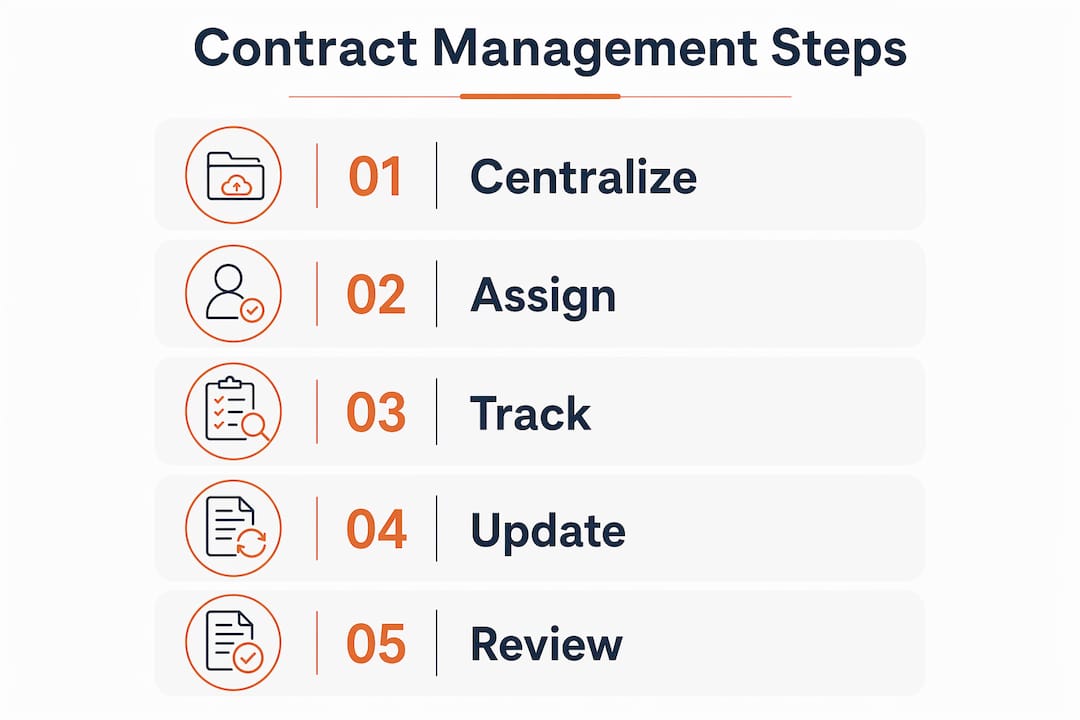
The most common failure mode is treating each contract as an isolated project rather than part of a connected system. When contracts are managed in silos, your team duplicates effort, misses cross-contract resource conflicts, and loses visibility into aggregate compliance status.
Common challenges and how to address them:
- Missed reporting deadlines. Set automated alerts 10 business days before every submission due date, not just the day before.
- Subcontractor compliance gaps. Verify SAM.gov registration and insurance certificates for every subcontractor at contract award and again at each major milestone.
- Data fragmentation. Consolidate all contract documents into one platform. Avoid storing files across email threads, shared drives, and paper binders simultaneously.
- Amendment tracking failures. Assign one person to log every contract modification within 24 hours of receipt and notify all affected team members.
- Resource conflicts across projects. Build a cross-contract resource calendar that shows personnel and equipment commitments by week, not just by project.
Proactive communication with contracting officers is a force multiplier. When you anticipate a delay or a compliance issue, notify the contracting officer before the deadline passes. Federal contracting officers have discretion to grant extensions and issue cure notices. They rarely extend goodwill to firms that go silent.
“Successful government contractors integrate contract execution as continuous, daily operational activities rather than sporadic tasks to maintain compliance and efficiency.” — Contract management experts
Firms that want to avoid the most costly federal bidding mistakes build their compliance culture before they win contracts, not after. The habits that protect you during execution start during the bid phase.
Key Takeaways
Effective simultaneous contract management requires centralized systems, named accountability, and technology that tracks obligations in real time across every active federal agreement.
| Point | Details |
|---|---|
| Centralize all deadlines | Use a shared digital calendar covering every reporting and compliance milestone across all contracts. |
| Convert clauses into tasks | Assign every contract clause a named owner, a deadline, and a required deliverable format. |
| Replace spreadsheets with CLM tools | Enterprise CLM or ERP platforms provide real-time tracking and automated alerts that spreadsheets cannot. |
| Request post-award debriefs | Submit debrief requests within 3 days of award notices to capture scoring feedback for future bids. |
| Communicate early with contracting officers | Proactive notice of delays preserves goodwill and opens the door to extensions before deadlines pass. |
What I’ve learned from watching firms succeed and fail at multi-contract management
I have worked alongside construction managers who run four federal contracts at once without breaking a sweat, and others who struggle with two. The difference is never talent. It is always systems.
The firms that succeed build their contract management infrastructure before they need it. They do not wait until they win a third contract to set up a CLM platform or define contract ownership roles. They treat government contract oversight as a permanent operational function, not a project management afterthought.
The firms that struggle share one trait: they rely on individual heroics. One project manager who “knows where everything is” becomes a single point of failure. When that person leaves or gets pulled to a new bid, compliance visibility collapses overnight.
My honest advice for mid-sized construction firms is this: invest in your contract management infrastructure at the same level you invest in your field equipment. A missed Davis-Bacon payroll submission or a late progress report costs far more than the time it takes to build a proper tracking system. And if you are serious about growing your federal contract portfolio, you need that infrastructure in place before the next award lands.
The firms I respect most also use their post-award debriefs religiously. They treat every loss as a data point and every win as a baseline to beat. That discipline compounds over time into a measurable competitive advantage.
— Rowena
How Federal-rconstructionsolutions supports your contract management goals
Mid-sized construction firms managing multiple federal contracts need more than general advice. They need a partner who understands FAR compliance, agency-specific reporting requirements, and the operational pressure of running concurrent projects.
Federal-rconstructionsolutions delivers exactly that through its federal procurement services, including RFP writing, compliance support, and bid strategy tailored to your firm’s NAICS codes and past performance profile. The team also provides bid support through ConstructConnect, helping firms track project leads and manage submission timelines across multiple opportunities. Federal-rconstructionsolutions has helped clients achieve 90% compliance on bid submissions and secure contracts on public infrastructure projects, including water systems work. If your firm is ready to manage more contracts with fewer compliance risks, Federal-rconstructionsolutions is the right starting point.
FAQ
What is simultaneous contract management in construction?
Simultaneous contract management is the practice of overseeing two or more active government construction contracts under a unified compliance and operational system. It requires centralized tracking, named accountability, and integrated software to prevent missed obligations.
How does the FAR affect firms managing multiple contracts?
The Federal Acquisition Regulation applies to every federal construction contract and imposes hard deadlines for reporting, certified payroll, and subcontractor compliance. Firms managing multiple contracts must track FAR obligations separately for each agreement.
What tools work best for government contract oversight?
Enterprise CLM platforms and ERP systems with real-time obligation tracking outperform spreadsheets for multi-contract management. They provide automated alerts, centralized documentation, and audit-ready reporting across all active contracts.
How do you prevent compliance gaps across multiple contracts?
Build a master obligation register that lists every contractual requirement by contract, deadline, and responsible party. Review it weekly and update it within 24 hours of any contract modification or amendment.
When should a firm request a post-award debrief?
Submit a debrief request within 3 days of receiving an award notice. Federal agencies provide numerical scores and written feedback that directly improve future bid submissions and contract win rates.

