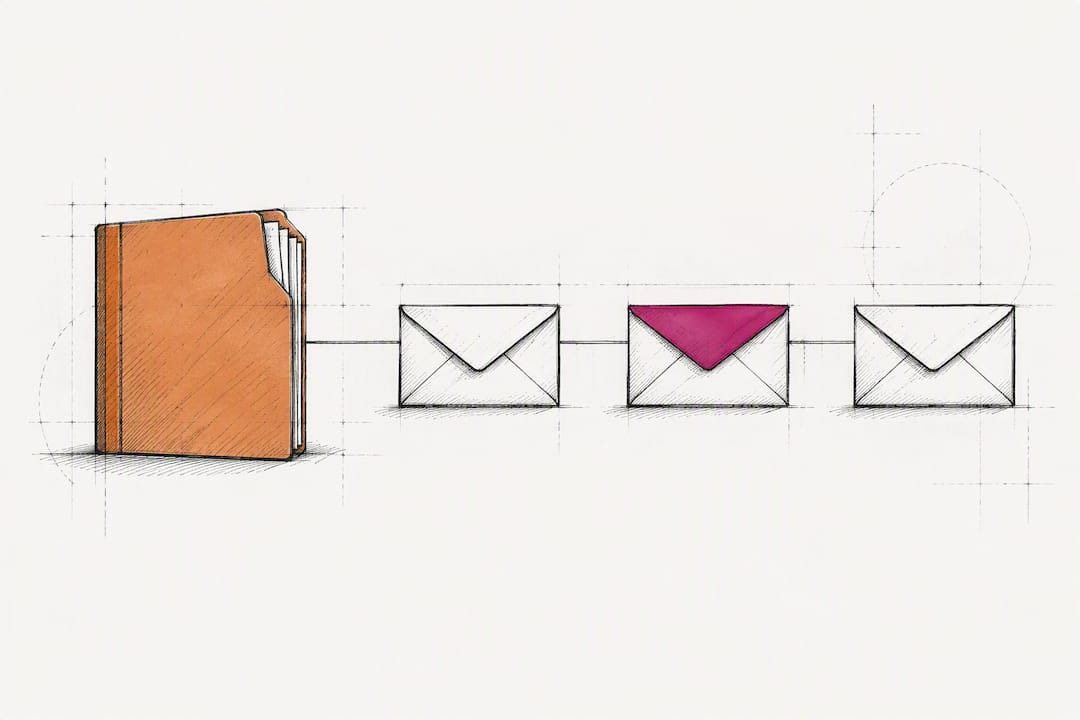
Construction Email Marketing: Two Automations That Close Estimates
Email marketing works for construction companies when it’s built as a permission-based, segmented program rather than a generic monthly blast. The fastest path to results this week: capture consent on every quote form and job handover, then set up two automations, a welcome series and a three-touch estimate follow-up. Everything else, compliance and measurement included, supports those two moves.
TL;DR:
- Capturing consent through quote forms, job handovers, and lead magnets is essential to build a high-quality email list that stays out of spam.
- Segmenting audiences into specifiers, trade partners, past clients, and referrals ensures relevant messaging and prevents audience insult.
- Automations such as welcome series, estimate follow-ups, and review requests are critical to maintaining engagement and closing leads efficiently.
- Using simple, mobile-friendly designs and authentic metrics like click-through and booked jobs improves deliverability and tracks real sales impact.
- Consistent, valuable content with a small ask ratio builds trust, maximizes ROI, and keeps prospects and clients engaged over long sales cycles.
Table of Contents
- Why Construction Email Marketing Matters for Long Sales Cycles
- How Do You Build a Permission-Based Email List?
- Which Audience Segments Should You Build First?
- What Should You Send, and How Often?
- What Automations Actually Move the Needle?
- Design, Deliverability, and Compliance Checklist
- Which Metrics Actually Tie Back to Booked Jobs?
- Subject Lines, Templates, and a 3-Email Follow-Up Sequence
- Applying Email to Bid Pipelines and Federal Procurement
- Practitioner View: Do This First If You Have One Hour a Week
- How R. Construction Solutions Can Help Connect Email to Bid Work
- Sources
- FAQ
Why Construction Email Marketing Matters for Long Sales Cycles
Construction deals rarely close on contact one. A commercial specifier might sit on a decision for eight months; a homeowner comparing three bids for a kitchen remodel needs two or three weeks of reassurance before signing. Email is the one channel that stays in front of a buyer through that entire window without a media budget attached to every impression.
Social platforms and paid search rent attention. Email owns the contact, which matters more in construction than in almost any other B2B category, because the buyer disappears for months between the estimate and the signed contract, then vanishes again for years until the next remodel or the next referral.
Marketers still rate email among the highest-ROI channels available, according to Statista’s research on email marketing ROI perception, and that perception holds up in construction specifically because the audience is small, known, and reachable directly. A general contractor with 400 past clients and 150 open leads doesn’t need reach. It needs a channel that keeps those exact 550 people warm until they’re ready to buy again or refer someone who is.
How Do You Build a Permission-Based Email List?
List quality decides whether your emails land in an inbox or a spam folder, so capture consent at every point a prospect or client already interacts with your business. Contractor-focused workflows built around quote forms, job handovers, and review requests consistently convert past jobs into repeat revenue, according to ProTradeHQ’s guidance on contractor list building.
Build capture into these moments:
- Quote request forms — ask for email as a required field, phone as optional, and add a single checkbox for marketing consent separate from the quote request itself.
- Job completion and handover — this is the highest-intent moment you’ll ever get; ask for an email to send warranty info, care instructions, and photos of the finished work.
- Website lead magnets — a downloadable “cost guide” or “permit checklist” trades real value for an inbox address.
- Referral partner sign-ups — architects, realtors, and property managers who refer work deserve their own opt-in list, separate from homeowner leads.
Once addresses start flowing in, protect them. Suppress hard bounces immediately, flag anyone who hasn’t opened in six months for a re-engagement or removal campaign, and authenticate your sending domain so mailbox providers trust your messages. Under the CAN-SPAM Act, every commercial email needs a valid postal address and a working way to opt out, and you’re required to honor those opt-out requests promptly, per the FTC’s compliance guide. Build that into your welcome email template once and you never have to think about it again.
Which Audience Segments Should You Build First?
A single newsletter sent to a specifier, a subcontractor, and a homeowner insults all three. Specifiers want technical detail and continuing-education content; a homeowner wants to know when their project starts. Sector guidance from Jointly’s construction email marketing playbook consistently points to a three-audience model as the practical minimum, and a fourth and fifth segment round it out for most builders.
Set these up as tags or custom fields in your CRM, not separate spreadsheets:
- Specifiers (architects, engineers, municipal planners) — send technical spec sheets, continuing-education invites, and material updates.
- Trade and subcontractor partners — send bid opportunities, schedule changes, and payment or certified-payroll reminders.
- Past clients — send seasonal maintenance tips, project spotlights, and referral requests.
- Open leads — send estimate follow-ups, project galleries, and financing or timeline information.
- Referral partners (realtors, property managers) — send closed-deal thank-yous and updated service area or capacity info.
A roofing contractor sending a “new shingle colors available” email to a structural engineer wastes the send and signals you don’t understand your own audience. Tag correctly once, and every future campaign routes itself.
What Should You Send, and How Often?
Content type and frequency depend entirely on which segment you’re emailing; staying updated with industry news can help tailor your email content effectively. A monthly cadence works for past clients; specifiers expect something closer to quarterly, and trade partners want news-driven sends only when there’s an actual bid or schedule update worth their time.
- Estimate follow-ups — sent to open leads within days of a quote, not weeks.
- Project spotlights — before-and-after photos sent to past clients and prospects alike, proof of work over claims about work.
- Seasonal maintenance reminders — gutter cleaning in fall, HVAC checks in spring, timed to when the problem actually starts.
- Continuing-education invites or CEU credit notices — sent to specifiers on a quarterly rhythm.
- Material or stock notices — relevant to trade partners and suppliers, sent only when there’s real news.
Underneath all five sits the 80/20 rule: roughly 80% of what you send should be genuinely useful, project photos, maintenance advice, industry updates, and only 20% should ask for anything. Construction email specialists favor this ratio because trust erodes fast in an industry built on referrals; a list that only hears from you when you want a signed contract stops opening your emails within two or three sends.
What Automations Actually Move the Needle?
Most construction companies lose leads to slow follow-up, not bad service. A prospect who requests three quotes typically signs with whichever contractor responds first and follows up most consistently, which makes automation the highest-leverage fix available to a two-person marketing team.
Five automations cover almost every drop-off point in a typical sales cycle:
- Welcome series (triggered on opt-in) — introduce the company, set expectations, link to a project gallery.
- Estimate follow-up (three touches over 10 days) — check in, answer objections, offer a call.
- Appointment reminder (24 hours before a site visit) — reduce no-shows on estimate appointments.
- Review request (triggered on job completion) — ask while the work is still fresh in the client’s mind.
- Winback (triggered after 12 months of inactivity) — re-engage past clients before a competitor does.
Each one runs without a human touching send, and each one closes a gap where leads currently go cold.
Pro Tip: Set your estimate follow-up sequence to send at day 2, day 5, and day 10 after the quote, not all in the first week. Buyers comparing multiple bids need that spacing to actually make a decision, and a single well-timed nudge on day 10 often closes deals that day 2 never could.
Design, Deliverability, and Compliance Checklist
Half of construction email opens still happen in Outlook, which mangles complex HTML layouts more often than any other client. Practitioners who work in this space favor simple, text-forward designs with a single call to action over image-heavy templates, precisely because a broken layout reads as more unprofessional than no design effort at all.
Run every campaign against this list before you hit send:
- Design for Outlook and mobile first: live text over images, one clear CTA, minimal graphics.
- Authenticate your domain with SPF, DKIM, and DMARC records so mailbox providers trust your sends.
- Never buy a list. Purchased contacts generate spam complaints that damage the sender reputation your legitimate list depends on.
- Clean bounces and inactive addresses on a quarterly schedule, not once a year.
- Include a valid postal address and a working unsubscribe link in every commercial email, and process opt-outs promptly, exactly as the FTC’s CAN-SPAM compliance guide requires.
Noncompliance under CAN-SPAM carries real financial exposure per violation, which the FTC guide outlines directly. That’s not a reason to fear email. It’s a reason to build the unsubscribe link and postal address into your template once, so compliance never depends on someone remembering.
Which Metrics Actually Tie Back to Booked Jobs?
Open rate has become close to meaningless since Apple’s Mail Privacy Protection started pre-fetching images on nearly every iPhone inbox, inflating opens regardless of whether a human read anything. Click-through rate and click-to-open rate tell you far more, because they require an actual person to act.
| Metric | What it tells you | Where to focus |
|---|---|---|
| Click-through rate | Percentage of recipients who clicked a link | Content relevance and CTA clarity |
| Click-to-open rate | Clicks relative to opens, not total sends | Subject-line-to-content match |
| Unsubscribe rate | List fatigue or wrong-segment sends | Frequency and targeting |
| Bounce rate | List hygiene and deliverability health | Domain reputation and cleaning cadence |
| Booked appointments | Estimate requests scheduled from an email link | Overall pipeline contribution |
Tie every one of these back to your CRM, not just your email platform’s dashboard. A weekly glance at click-to-open and a monthly review of how many booked jobs originated from an email link tell you far more than any open-rate report ever will.
Subject Lines, Templates, and a 3-Email Follow-Up Sequence
Different audiences respond to different subject-line logic. A homeowner opens curiosity or urgency; a specifier opens specificity; a trade partner opens news.
- Homeowners: “Your kitchen remodel estimate is ready” or “3 things to check before your roof replacement”
- Trade partners: “New bid opportunity: [Project Name], due [Date]”
- Specifiers: “Updated spec sheet: [Product/Material] now available”
Three templates cover most of what a small marketing team needs to launch this month.
Welcome email: “Thanks for reaching out, [First Name]. Here’s what happens next: we’ll review your project details and follow up within 24 hours with next steps. In the meantime, here’s a look at [recent project link].”
Estimate follow-up: “Hi [First Name], following up on the estimate we sent for [Project Type]. Any questions on scope, timeline, or pricing? Happy to hop on a quick call this week.”
Review and referral request: “Hi [First Name], it was great working with you on [Project Name]. If you have two minutes, a review helps other homeowners find us, and if you know anyone planning a similar project, we’d love an introduction.”
Sequence these three touches at day 0 (welcome), day 5 (first estimate check-in), and day 10 (second check-in with a soft deadline, “we’re booking for [Month], let us know if you’d like to move forward”). Personalize with first name, project type, and estimate amount tokens where your platform supports them, and send every click to a landing page built for that specific offer, not your homepage.
Applying Email to Bid Pipelines and Federal Procurement
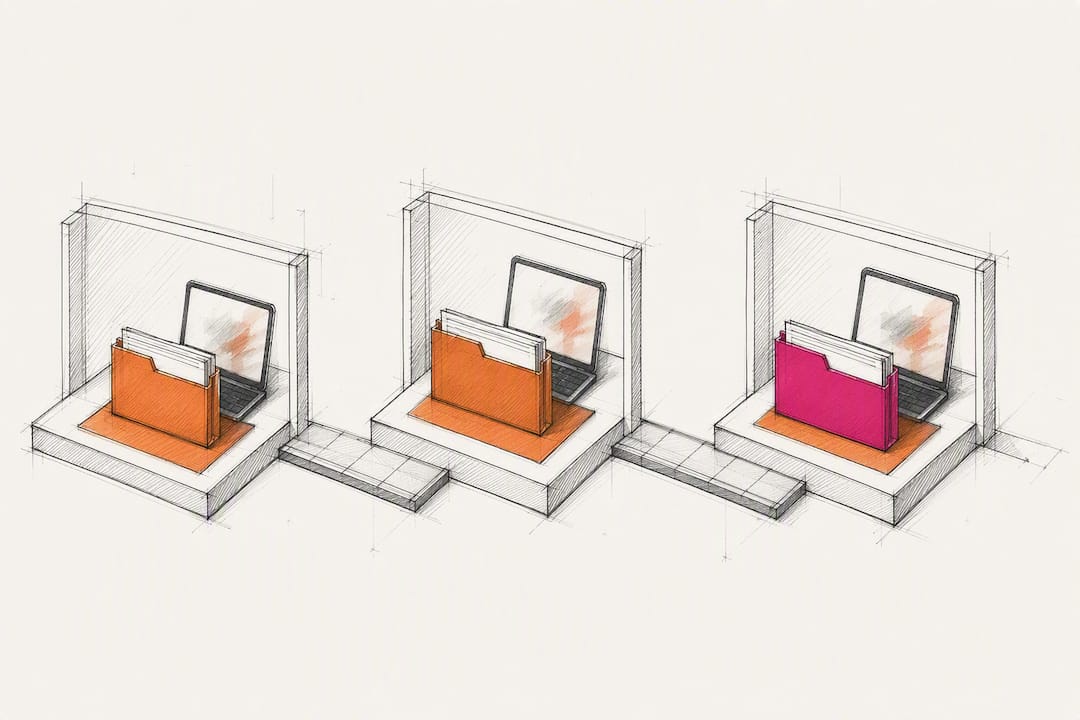
Federal procurement runs on relationships kept warm over months, sometimes years, between opportunities. R. Construction Solutions applies the same segmentation logic used for homeowner leads to a contractor’s pre-qualification and past-agency pipelines: a targeted sequence keeps a contracting officer or agency contact engaged without requiring a phone call every two weeks.
Effective sequences for RFP timelines include a pre-bid reminder sent as the deadline approaches, a capability statement send when a new opportunity opens, and a submission confirmation that closes the loop once a bid goes in. Tying that email activity into a working bid pipeline and a contractor CRM means engagement data, who opened a capability statement, who clicked a bid link, feeds directly into which opportunities get prioritized next.
Practitioner View: Do This First If You Have One Hour a Week
Skip the platform comparison and the content calendar debate. Spend hour one adding a consent checkbox to your quote form. Spend hour two building the welcome and estimate follow-up automations. Spend hour three writing one genuinely useful monthly email, a project spotlight or a seasonal tip, and send it.
The most common failure mode isn’t bad copy. It’s inconsistency, three great emails followed by four months of silence. And on imagery: if your email templates or landing pages feature people, use photos that reflect the real diversity of the construction workforce across race and sex, not the same demographic in every graphic.
— Rowena
How R. Construction Solutions Can Help Connect Email to Bid Work
Some construction consulting firms focus on helping companies that are excellent at building things but often struggle to keep procurement pipelines organized. If you’ve read this far and realized your estimate follow-ups are inconsistent or your past-agency contacts haven’t heard from you since the last award, that’s the gap Federal-rconstructionsolutions closes.
Federal-rconstructionsolutions offers RFP writing and submission support, SAM.gov registration and renewal help, and private sector growth strategies that include tailored project strategies and process optimization, all built to keep your bid pipeline and client communication running as one coordinated system rather than two disconnected efforts.
If your team is spending more hours chasing paperwork than following up with warm leads, that’s the tipping point to bring in outside support rather than stretching an already thin marketing effort. Visit the DOT and federal compliance service page to see how RFP writing, compliance support, and budget management work together, and get in touch to discuss where your current pipeline has the biggest gaps.
Sources
- CAN-SPAM Act: A compliance guide for business
- Construction email marketing: the practical guide | Jointly
FAQ
What Is the 80/20 Rule in Email Marketing?
The 80/20 rule means roughly 80% of your emails should deliver genuine value—project photos, maintenance tips, industry updates—and only 20% should ask for something, like a booking or a referral. Construction email specialists favor this balance because a list that only hears from you when you want a sale stops opening your emails fast.
Is Email Marketing Still Worth It for Construction Companies?
Yes. Email remains one of the highest-ROI channels available according to Statista’s ROI perception data, and that value compounds in construction because sales cycles run long and referrals depend on staying visible between projects. A permission-based, segmented list with a few automations consistently outperforms one-off social posts for generating repeat and referral work.
What Is the Best Marketing Approach for a Construction Company?
There’s no single best channel, but a segmented email program paired with a strong website and consistent bid-pipeline follow-up covers the widest range of buyer types, from homeowners to specifiers to referral partners. For companies pursuing federal or public contracts specifically, Federal-rconstructionsolutions applies that same email and CRM structure to keep pre-qualification and bid pipelines warm between opportunities.
Can a Contractor Have a Company Email Address?
Yes, and it’s one of the simplest credibility signals a construction business can set up. A branded address ([email protected] rather than a personal Gmail account) improves deliverability, builds trust with specifiers and agencies, and satisfies the sender-identity expectations baked into CAN-SPAM compliance.
Recommended
- Bid Strategy Best Practices for Contractors: 2026 Guide
- Ways to Increase Construction Bid Volume in 2026
Working in the public sector? One short email a week — prevailing wage, certified payroll, bid protests, agency procurement rules. Free, no pitch. Subscribe.
Free and unconditional. No call required, no obligation, unsubscribe anytime.